Dan Barber [A Plate That Cultivates the Soil]
クリップボードにコピーしました
PART 2 "BLUE HILL AT STONE BARNS" is here
Article:Takumi Saito
日本語|ENGLISH
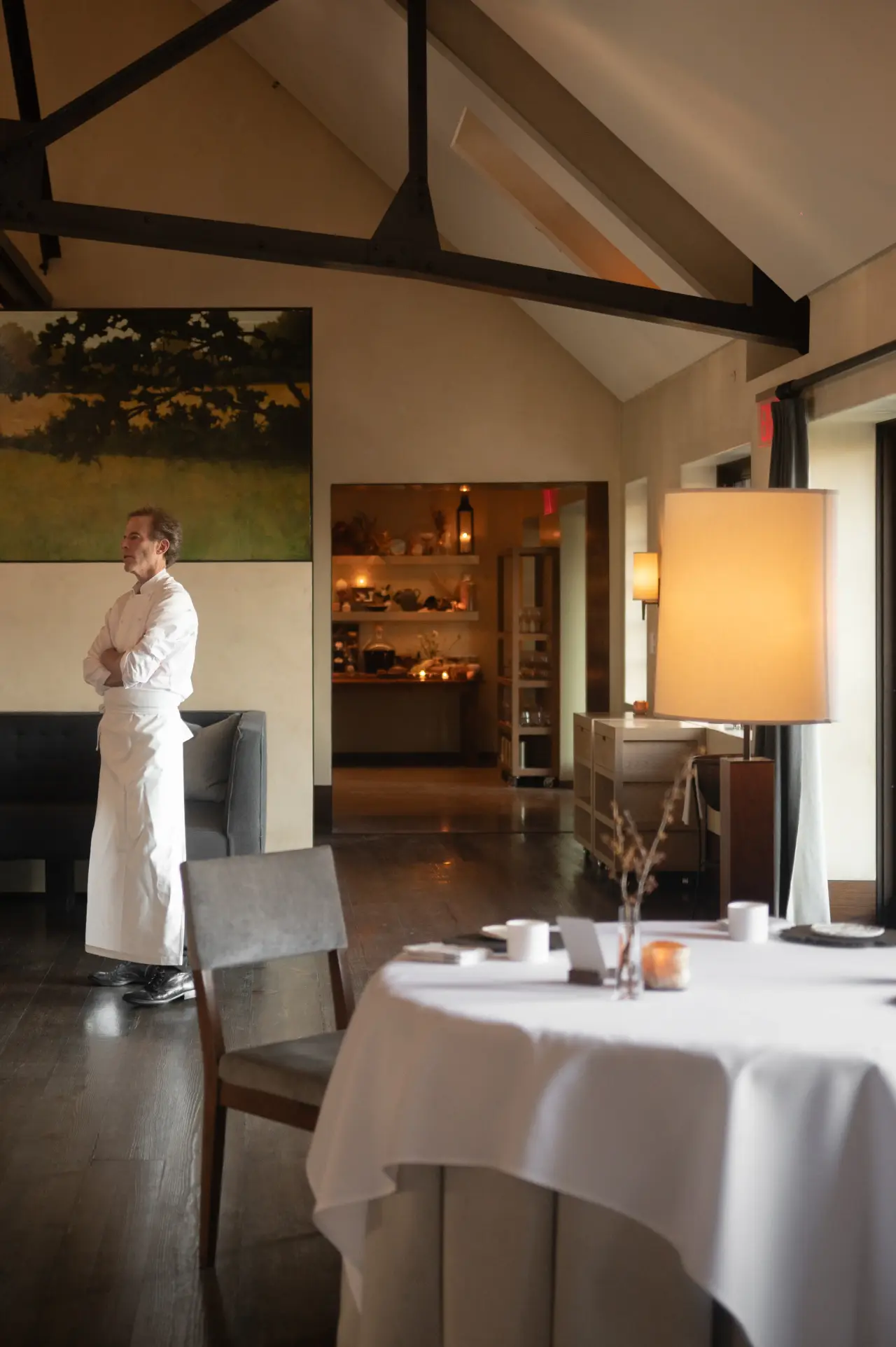
There is a chef named Dan Barber.
He is the owner-chef of two restaurants-Blue Hill at Stone Barns in upstate New York and Family Meal at Blue Hill in Manhattan. He also co-directs the Stone Barns Center for Food & Agriculture, an 80-acre (approximately 320,000 square meters) working farm, research institute, and educational center; and Rhizome, a company dedicated to food-related research and regional business development. Barber is also the co-founder of the seed company Row 7 Seed Company, and the author of The Third Plate: Field Notes on the Future of Food.
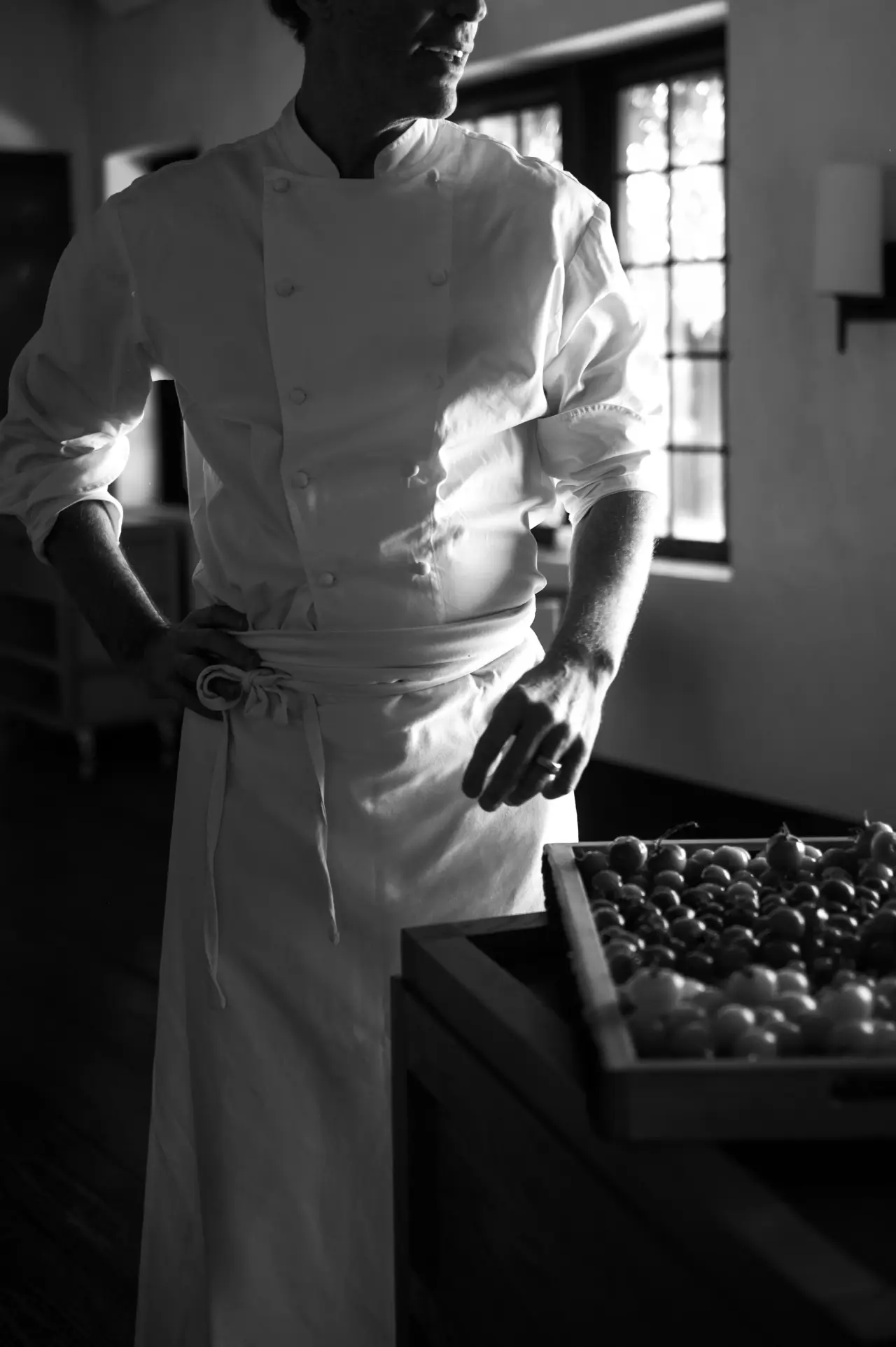
“Farm to Table” is merely a phrase describing a distribution scheme-food from the farm to the table. In the late 20th century, this concept of local production and consumption seemed to offer the “shortest” answer to the problems of mass food production, consumption, and waste. Technological advancements in production, processing, and logistics have made it possible to deliver ingredients from the other side of the world, but often at the expense of the planet’s health. The “Farm to Table” model, by contrast, preserves freshness and safety, promotes sustainable local agriculture, and carries a comforting ecological resonance. It almost feels like humanity has invented the perfect food distribution system. Yet, Barber questions this assumption: isn’t agriculture still ultimately serving human desire?
Once, it was the other way around-humans were nourished by agriculture. Cows were pastured to enrich the soil, chickens were raised to support the cattle, and sheep were kept to prevent farms from being overtaken by forests. People cultivated nature to ensure tomorrow’s food supply. Agriculture existed not to satisfy human cravings or chefs’ creative impulses, but to sustain life in balance with the earth. Crops were eaten as they came in season; crop rotation was devised to prevent soil exhaustion; prayers were offered for abundance, and thanks were given for harvests. Agriculture, perhaps, was a form of earthly faith.
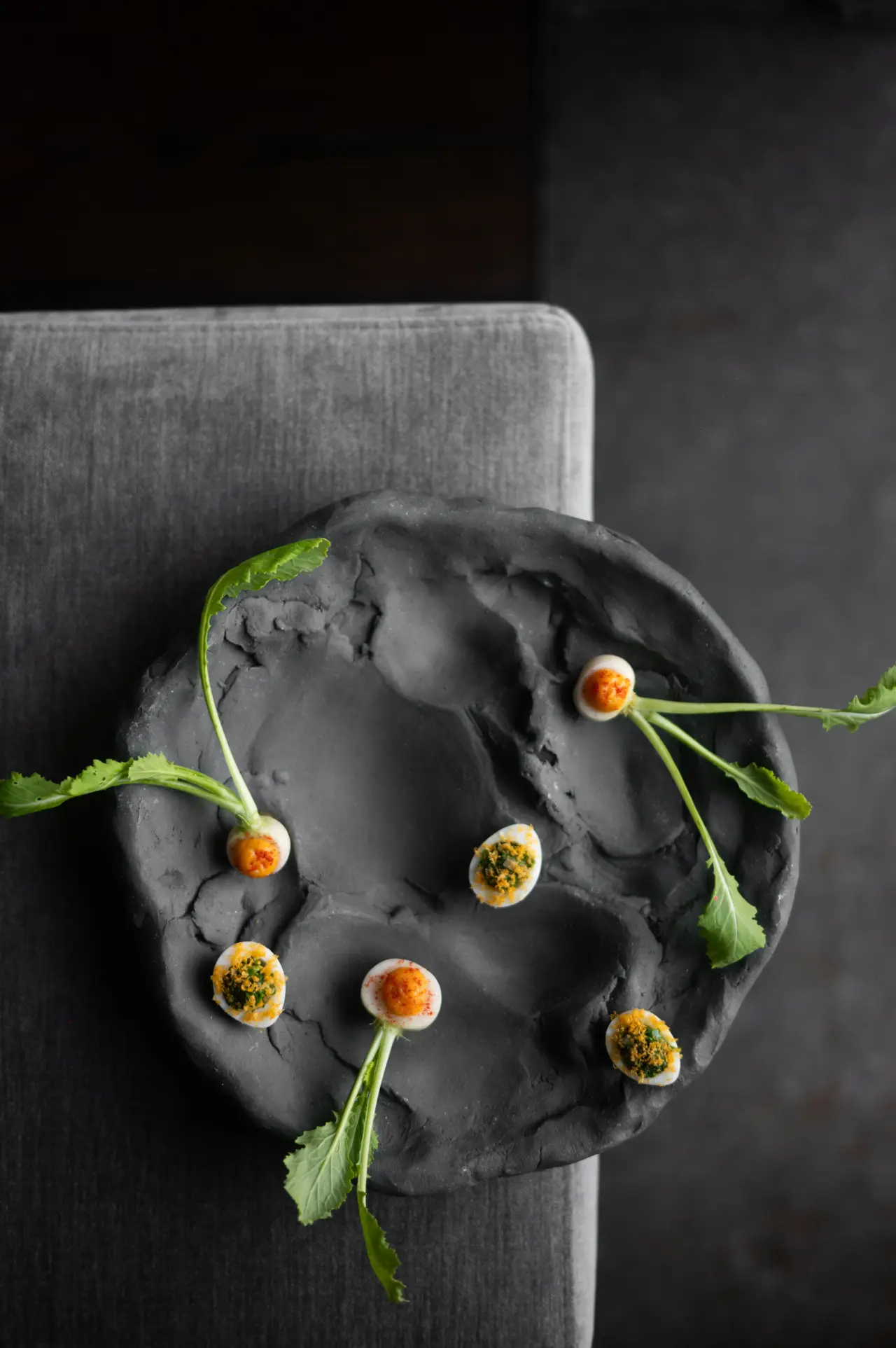
Barber advocates for the idea of the “Third Plate”-a culinary philosophy grounded in ecological awareness. He avoids ingredients that burden the planet, instead sourcing from Blue Hill’s own fields and partner farms that share his vision. Behind every dish lies the earth itself. Perhaps the concept is not Farm to Table but Table from the Mother Earth.
Because cooking begins with the health of the soil.
INTERVIEW
Dan Barber [A Plate That Cultivates the Soil]
——Let’s begin with the farm at Blue Hill at Stone Barns. In Japan, vegetables that don’t meet visual standards are considered “out of specification” and are often discarded before reaching the market. What are your thoughts on this?
There’s no need for vegetables to look perfect to meet market standards. What matters most is flavor. In both our kitchen and our fields, we find beauty and value not in uniformity but in diversity.
——How do you practice crop rotation?
It depends on the season, but we typically grow dozens of different crops at any given time. Our rotation system is designed to build soil fertility and manage pests and diseases without synthetic inputs. The planting plan changes every year, but our basic rule is that no plant family returns to the same soil for at least seven years. Our rotations include grains, legumes, brassicas, alliums, and cover crops.
——You’ve said before that “modern agriculture moves according to what chefs want to cook or what consumers want to eat.” At Row 7 Seed Company, you develop, grow, cook, and share seeds with farmers and restaurants. What’s the intention behind this?
Food markets are shaped by distribution-from grower to consumer. For decades, seed breeding focused on yield and uniformity, which made sense for industrial supply chains. But the result has been food that’s easy to produce yet poor in flavor and nutrition. Row 7 aims to flip that equation-to put flavor and nutrition at the center of breeding. We then work to align those qualities with agronomic traits that make crops viable at scale and profitable for farmers.
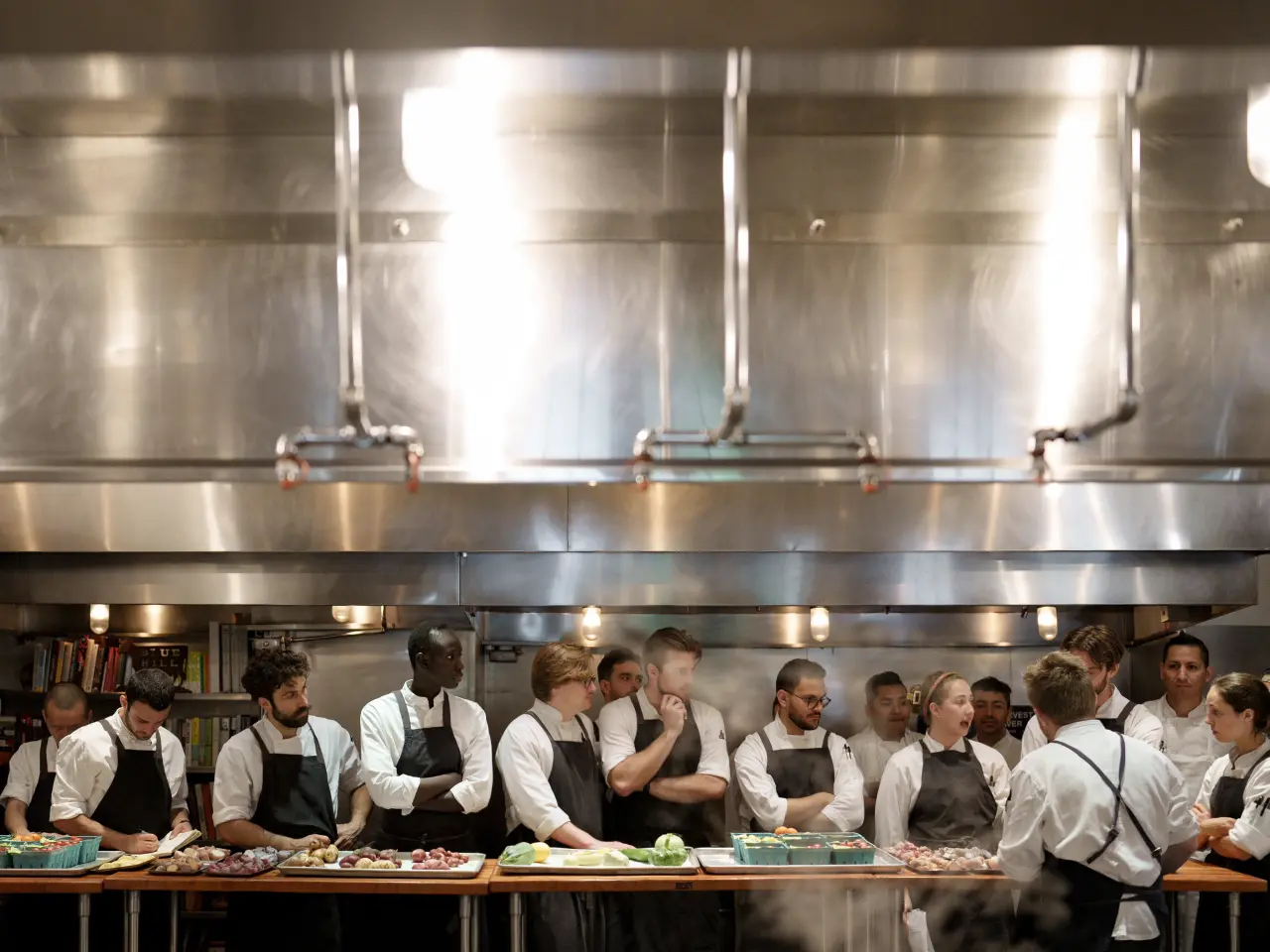
——You’ve also accepted retired dairy cows from nearby farms. What’s the idea behind that?
We’ve taken in a small number of retired, grass-fed dairy cows and have been experimenting with ways to finish them as an untapped source of protein for the restaurant. It’s not about volume-it’s research. We’re studying how feed quality affects animal health, flavor, and nutrition. What we’ve found is that cows fed nutrient-rich forage over many years produce meat with remarkable depth of flavor and higher nutritional value. Our research focuses on unlocking the full potential of each animal.
——I heard you succeeded in milking for the first time this year. That sounds groundbreaking-can you tell us more?
I wouldn’t call it “groundbreaking,” but rather a natural evolution of our work. We’ve long been interested in the potential of retired, grass-fed dairy cows-animals that no longer produce much milk but can yield delicious beef when properly cared for. Recently, we began working with dairy partners to receive cows that are still partially lactating. That’s what led to the phrase “our first milking at Stone Barns.” It means we can now use milk produced on-site. This also opens up new research opportunities-using milk composition (like fat-to-protein ratios) as indicators of both animal health and meat quality. It may even help us understand what’s needed to optimize a cow’s wellbeing in its later years.
——You keep your chickens in two separate groups.
Yes-one experimental group and one control group. The experimental flock is fed a diet made from food waste-vegetable trimmings, expired dairy, spent grain from breweries, and so on-while the control group gets standard organic feed. We compare not only the flavor but also the nutritional content of their eggs. The goal is to explore how waste-fed systems can support farmers and reduce food loss.
——The word “sustainability” has become a trend, sometimes even a kind of fashion statement. How do you define it?
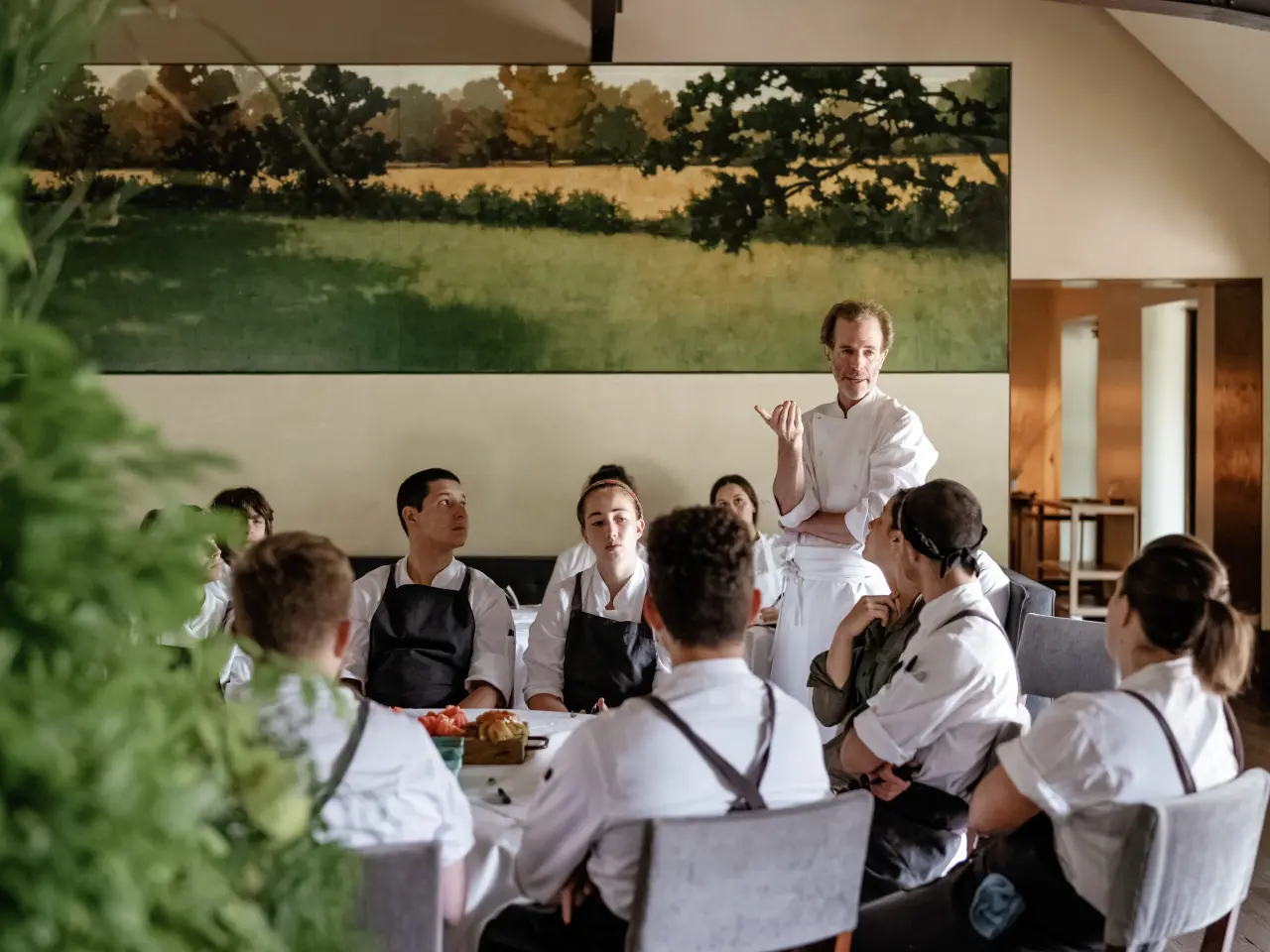
As a chef, I can only speak from the perspective of cooking. My understanding of sustainability has evolved over time. Today, I believe sustainable cuisine comes from organic farmers’ work. Their ability to “activate” the crops and animals they raise-to keep the soil alive-is what sustainability really means. Ingredients grown with soil health as the priority might not always make for flashy menus, but they help build a lasting culture of “cultivating the soil through food.” The chef’s role is to reveal the beauty in those ingredients.
——“Organic” is another word that’s been diluted by overuse. What does it mean to you?
I align with the principles of the Real Organic Project, an alternative certification led by organic farmers themselves-distinct from the USDA’s organic program. There, “organic” begins with feeding the soil. It reflects the health of the entire system-soil, plants, animals, and people. It’s not just about avoiding chemicals; it’s about regenerating land and supporting biodiversity through practice.
——Finally, what do you think is necessary for more consumers-not just the food conscious-to understand your idea of the “Third Plate”?
The key is accessibility. If we build systems rooted in flavor and soil health, delicious food won’t be the privilege of a few-it can become available to everyone.
Blue Hill at Stone Barns
Location:630 Bedford Road, Tarrytown, NY 10591
HP:https://bluehillfarm.com/
Dan Barber Instagram:@chefdanbarber
Blue Hill Farm Instagram:@bluehillfarm