BLUE HILL AT STONE BARNS
クリップボードにコピーしました
PART 1 "Dan Barber [A Plate That Cultivates the Soil]" is here
Article:Takumi Saito
日本語|ENGLISH
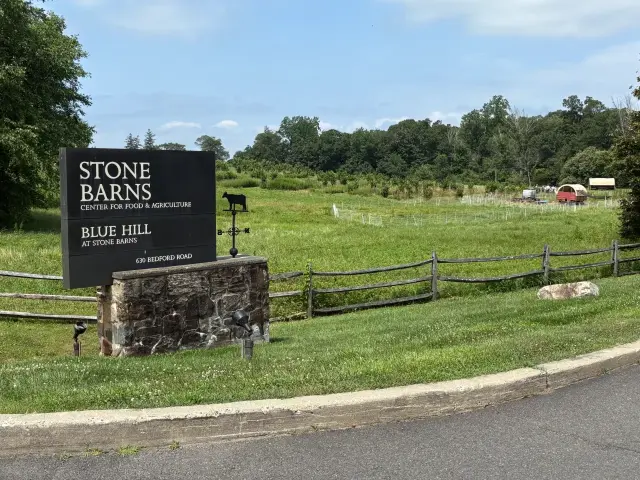
The farm tour offered by Blue Hill at Stone Barns (officially, the Stone Barns Center for Food & Agriculture) explores how sustainable agriculture, culinary innovation, and scientific research intersect within the Blue Hill philosophy. It’s a journey into the ideas that shape their radical approach to food.
The Blue Hill Team
Andrew Luzmore - Director of Special Projects
With expertise spanning from beverage development to agricultural research, Andrew leads collaborative research projects between farmers, academics, and private companies.
Joshua Pringle - Line Cook
When he visits Family Meal at Blue Hill in Manhattan, Chef Dan often asks him the next morning, “There must have been at least three things wrong with the meal. Name them.” All Joshua wanted was to enjoy dinner.
Jeff Hunt - Senior Livestock Farmer
He says his reason for working in agriculture comes from his desire “to be involved in every part of the process of creating food that nourishes people.”
Oriana Cartaya - Beverage Director
Formerly Director of Service at Stone Barns, Oriana took on her current role in January 2025.
Eli Pipkin - Head Baker & Miller
Featured on the USDA’s YouTube channel explaining “How to Bake Whole-Grain Bread,” Eli advocates for the nutritional, ecological, and cultural value of proper breadmaking.
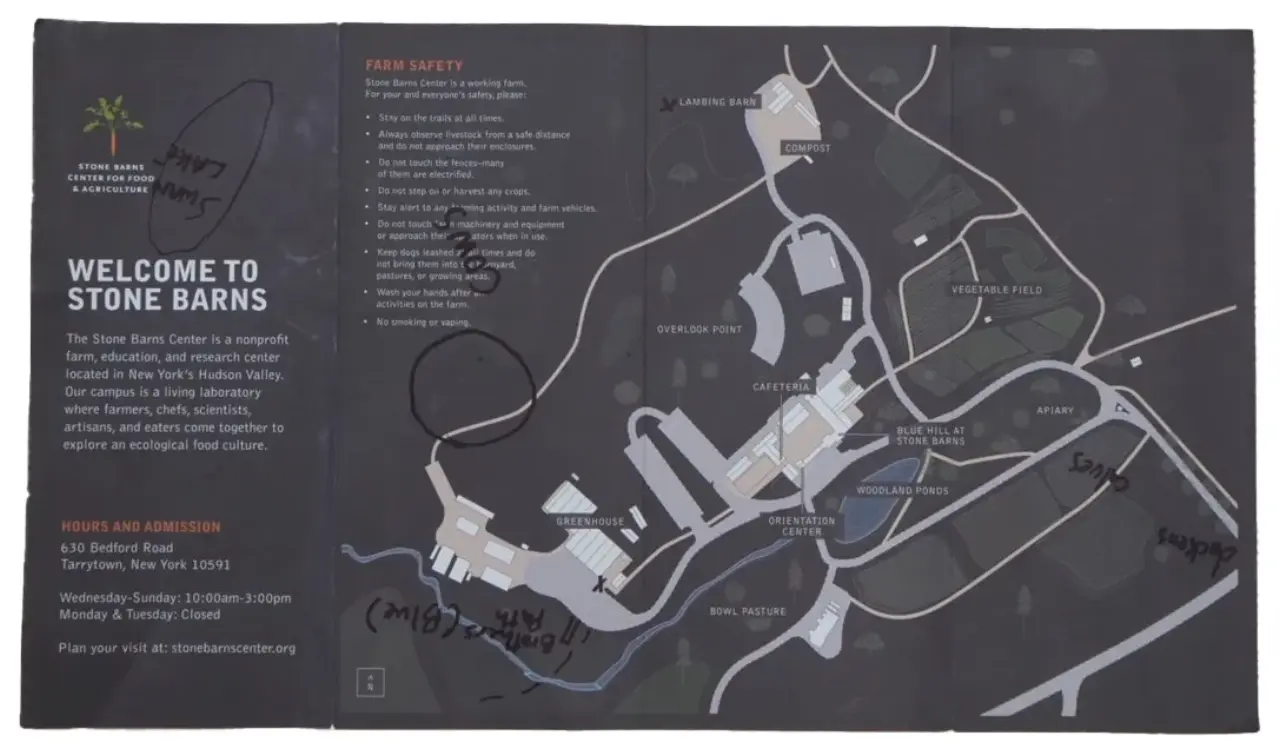
Front Capture Field
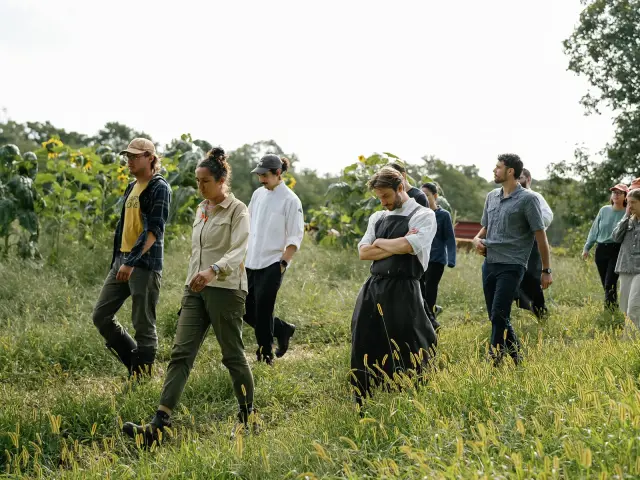
About an hour’s drive north from Manhattan, in the quiet suburb of Tarrytown, Westchester County, lies Blue Hill at Stone Barns. The estate covers 80 acres, bordered by Rockefeller State Park Preserve, with an additional 450 acres of rotational grazing land for livestock. Over 300 crop varieties are trialed each year. Two five-acre fields are rotated on a seven-year cycle, while the soil-based greenhouse follows a ten-year rotation. Twenty farmers and sixty restaurant staff work here-not merely as growers or cooks, but as researchers of food.
The tour begins at the Front Capture Field, where the long-term ley rotation system integrates grains, vegetables, flowers, and livestock in one unified space. Unlike conventional farms that separate crops and animals, this field embodies Stone Barns’ philosophy-studying how soil health, seed diversity, and biodiversity interact.
“What makes this facility unique,” says Joshua Pringle, “is that everything we grow must be used in the kitchen. Ingredients cultivated for soil and ecosystem research end up on the plate at Blue Hill. Right now, we’re growing sunflowers. In a month, every part of them will appear on the menu-maybe petals as a garnish, stems as an amuse-bouche. The harvest sparks new recipes and ideas for everyone in the kitchen.”
Vegetable Field
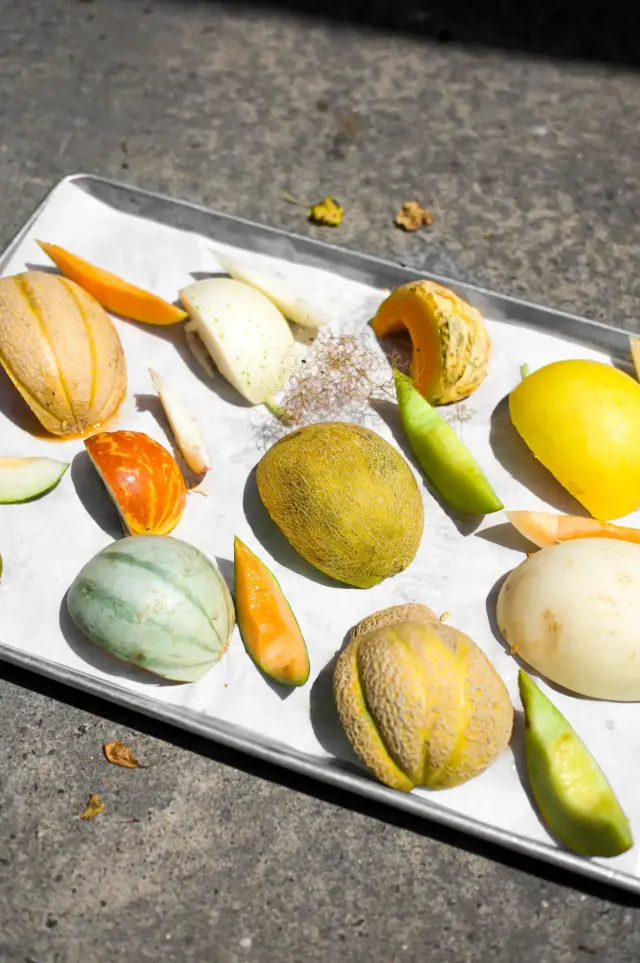
Stone Barns has two five-acre vegetable fields, each rotating crops on a seven-year plan. Crop families-brassicas, alliums, solanaceae, and others-are strategically sequenced to restore or replenish soil nutrients. For instance, corn depletes nitrogen, so it’s followed by legumes that fix nitrogen in root nodules, enriching the soil again. Most crops are annuals, though perennials like black raspberries are also cultivated. As a cover crop, the team grows summer squash under the guidance of Dr. Michael Mazourek from Cornell University. When Mazourek once visited, he famously picked up a squash stem and ate it. “In some parts of the world,” he explained to Dan Barber, “the entire plant is cooked.” That inspired Blue Hill to experiment with stem cookery.
“It’s amazing,” says Pringle. “Slice the stem, and it looks like penne noodles. We blanch them, toss with cheese and cream-almost like a cacio e pepe.”
Such collaborations with plant breeders often lead to new, unexpected flavors-even if the wider industry isn’t asking for them. Most of the produce grown here goes directly to the restaurant, but monthly from May through November, a farmers’ market is held in the courtyard, featuring organic produce from partner farms.
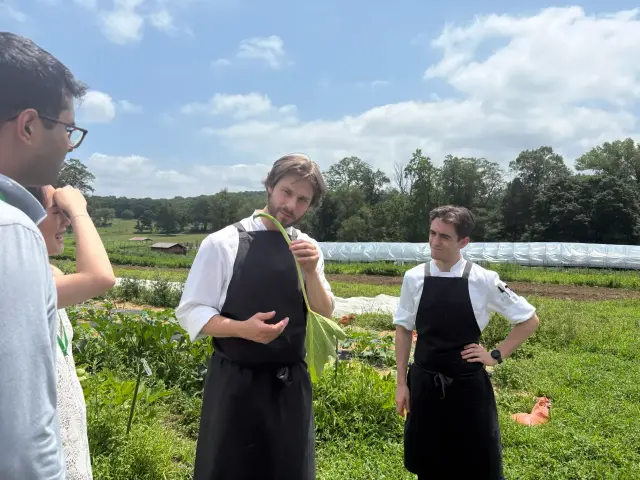
Oriana Cartaya, the Beverage Director, highlights the value of buckwheat in crop rotation:
“Planting buckwheat between wheat, corn, or barley cycles helps regenerate the soil. For the past few years, we’ve been experimenting with roasted buckwheat tea-and even sparkling buckwheat juice with white grape must and salt for sweetness. It’s both an homage to Japanese culture and an effort to elevate an underappreciated American crop. If we can bring buckwheat-grown-for-soil into consumer hands, we’ll create real benefits for farmers.”
Chicken Field
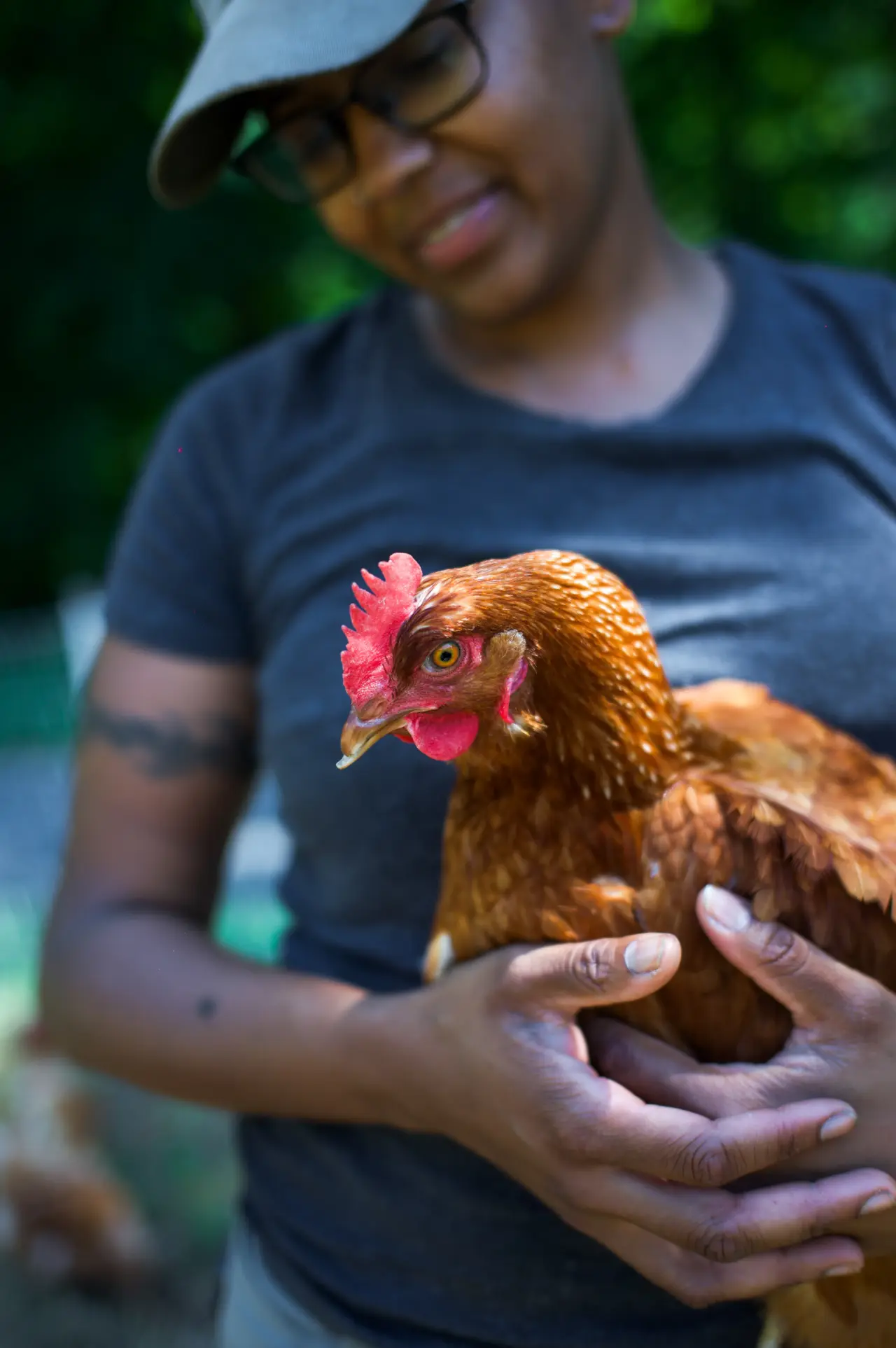
“Chickens are jungle animals by origin,” says senior livestock farmer Jeff Hunt. “They belong in the forest. If hazelnut trees grow and soft leaves unfurl in autumn, that’s where the chickens thrive-it’s almost as if we’re cultivating them.”
The flock is divided into two groups of 180. By comparing feed types, the team studies how diet influences bird health, egg flavor, and nutritional content.
“We’re exploring how to harness chickens’ natural omnivory. There’s little infrastructure or momentum for that in the U.S., so this is a valuable opportunity,” Hunt explains. “This morning, we held a formal egg tasting. We compared eggs from different feed types: our own two groups, those fed on partner farms’ food waste, eggs from hens fed marigold extract for deeper yolks, and even supermarket eggs-$5.99 a dozen. We taste, smell, and record every detail.”
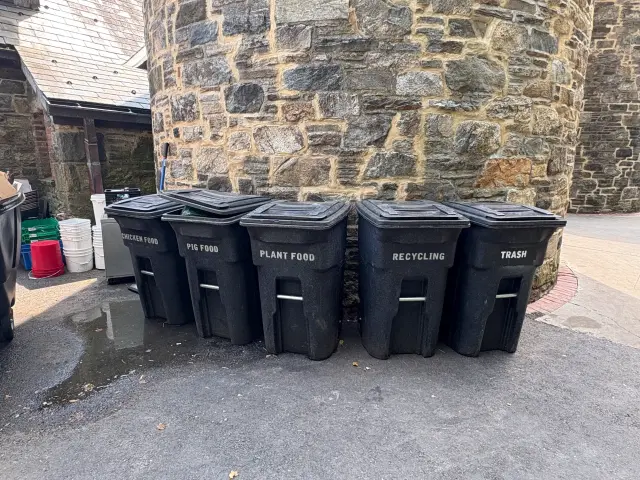
All food waste from the property-fish trimmings, vegetable scraps-is processed over four days and repurposed into feed distributed to local farms.
“We want to compile our findings and share how waste-based feeding systems can benefit both livestock and farmers,” says Hunt.
Calf Field
Stone Barns also takes in retired grass-fed dairy cows from nearby farms. After six months of rotational grazing and nutrient-rich feed, the animals are harvested. Occasionally, one gives birth during this period-a “happy accident,” as the team calls it-and the veal is served at the restaurant.
“Our mission,” says Andrew Luzmore, “is to raise cattle more intuitively, with thoughtfulness. Every three or four days, we move them across ten acres. It strengthens their muscles, improves their health, and adds complexity to both flavor and protein quality.”
This approach has defined the flavor of Blue Hill’s meat dishes for over a decade.
Bakery

Head baker and miller Eli Pipkin is on a mission to revalue flour. He questions the disconnect between breadmaking and its raw material-grain. Instead of buying flour, Blue Hill mills local grains on-site using two 40-inch, 700-pound stone mills in a single-pass system. Most American mills sift out the bran and germ, producing shelf-stable white flour that’s nutritionally hollow.
“That’s just starch-essentially sugar,” Eli says. “It’s functional for mass production, but not for our philosophy. We start by sourcing ten or more grains, milling them, testing for flavor and texture, and blending for the right dough consistency.”
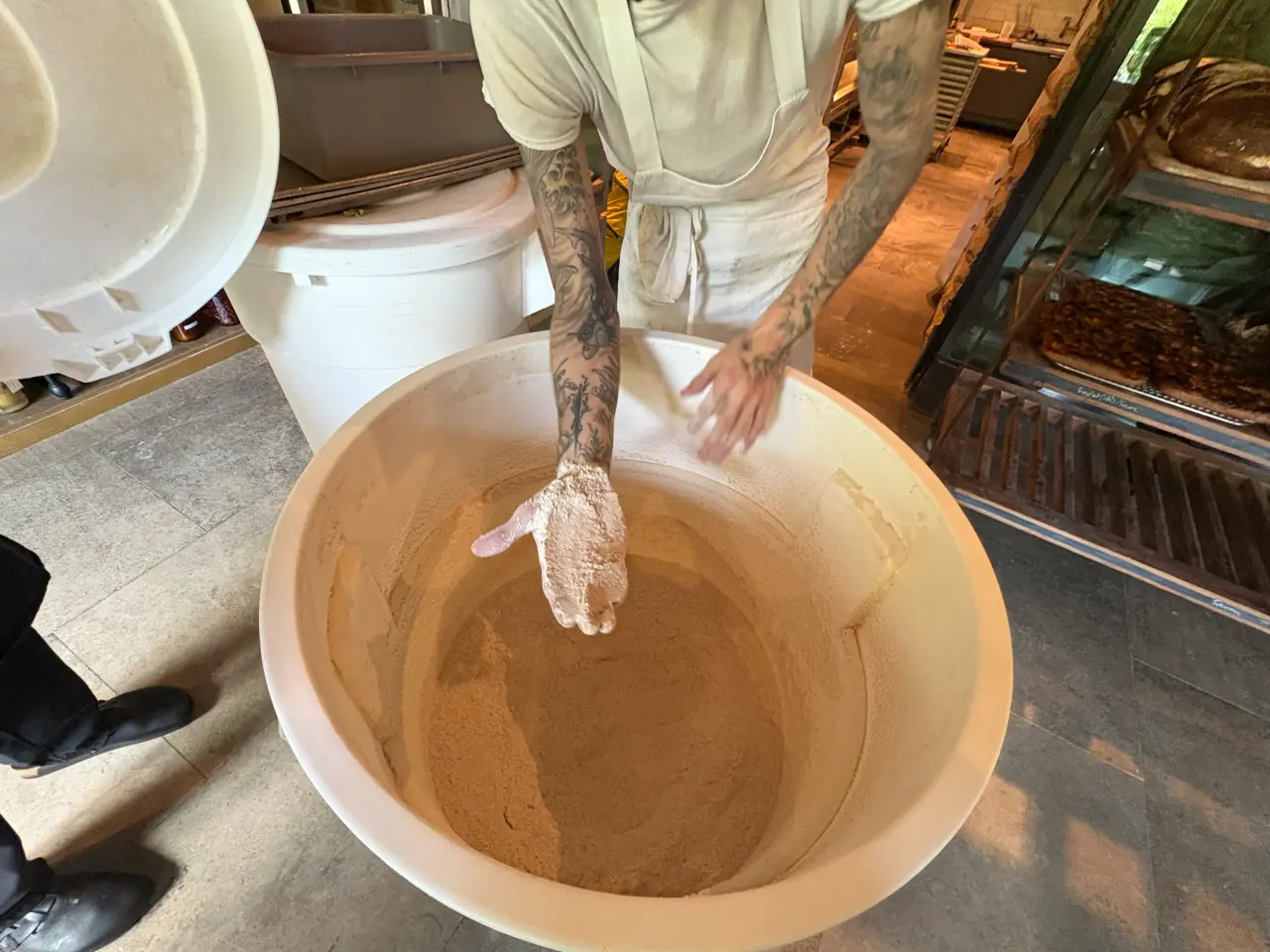
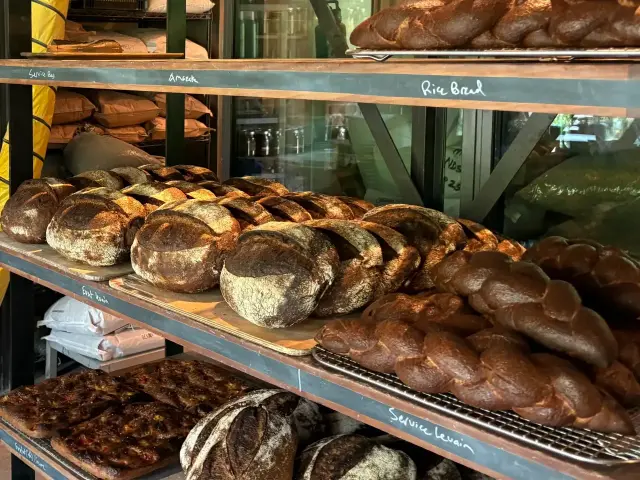
Their focus is on whole-grain bread-for both flavor and nutrition.
“Whole grains contain proteins, fats, vitamins, and minerals. Lutein, for example, is good for the eyes. Freshly milled regenerative grains are alive and active ingredients.”
The bakery relies on long sourdough fermentation, a process that breaks down bread for easier digestion.
“It’s a kind of pre-digestion. Yeasts and bacteria do the work for you, making bread more digestible and keeping blood sugar stable. If people have forgotten that bread is a nutritious food, I’d tell them-just eat a slice of this baguette. Or try our naturally fermented tomato focaccia.”
“Bread deserves the same respect as wine grapes,” Eli adds. “It’s about terroir-the grain’s origin, the season, the harvest weather. These factors all shape flavor. It takes patience, but one day you pull an extraordinary loaf from the oven-and all that complexity feels worth it.”
At the end of the tour, we asked Director Andrew Luzmore one final question: Is this farming for research, or for the restaurant?
“That’s the beauty of the Stone Barns system,” he replied. “Production, use, and research are one and the same. Everything grown on the farm connects directly to the work in the kitchen. When food grown for soil health reaches the plate, the diner becomes the final evaluator of our research. Success or failure-it all comes down to one question: does it taste good?”
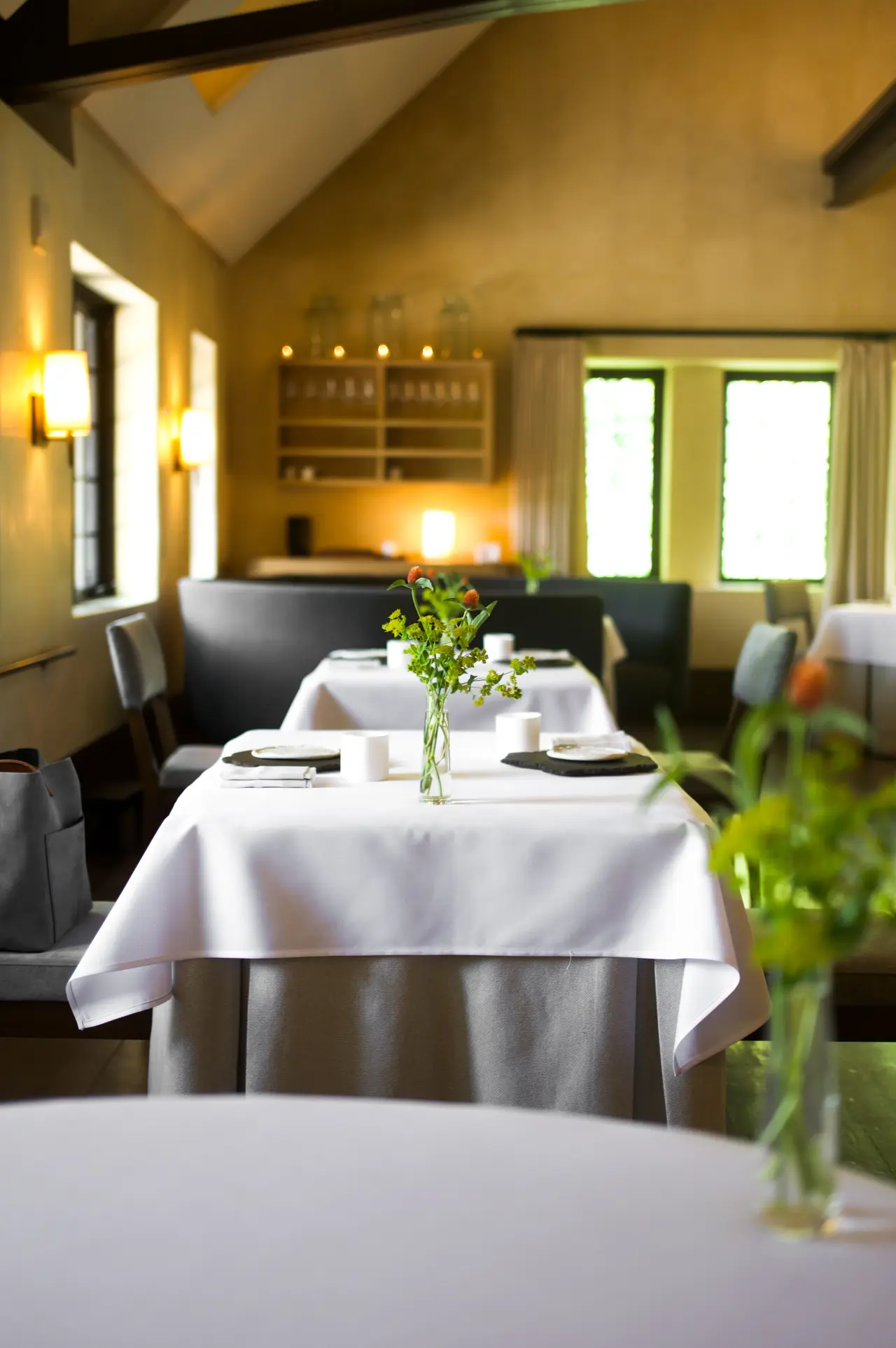
Blue Hill at Stone Barns
Location:630 Bedford Road, Tarrytown, NY 10591
HP:https://bluehillfarm.com/
Dan Barber Instagram:@chefdanbarber
Blue Hill Farm Instagram:@bluehillfarm