Michael Ottley [Food Is Home]
クリップボードにコピーしました
Article:Takumi Saito
日本語|ENGLISH
There is a chef named Michael Ottley.
He is the Chief Operating Officer and head chef of the Holy Apostles Soup Kitchen, based at the Holy Apostles Church in Chelsea, on Manhattan’s west side. For the past 17 years, he has cooked there.
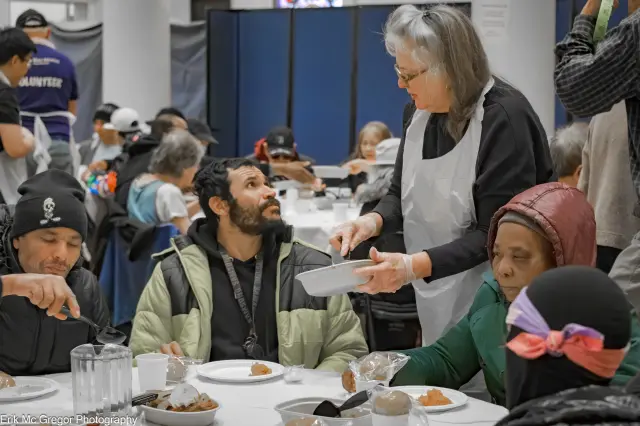
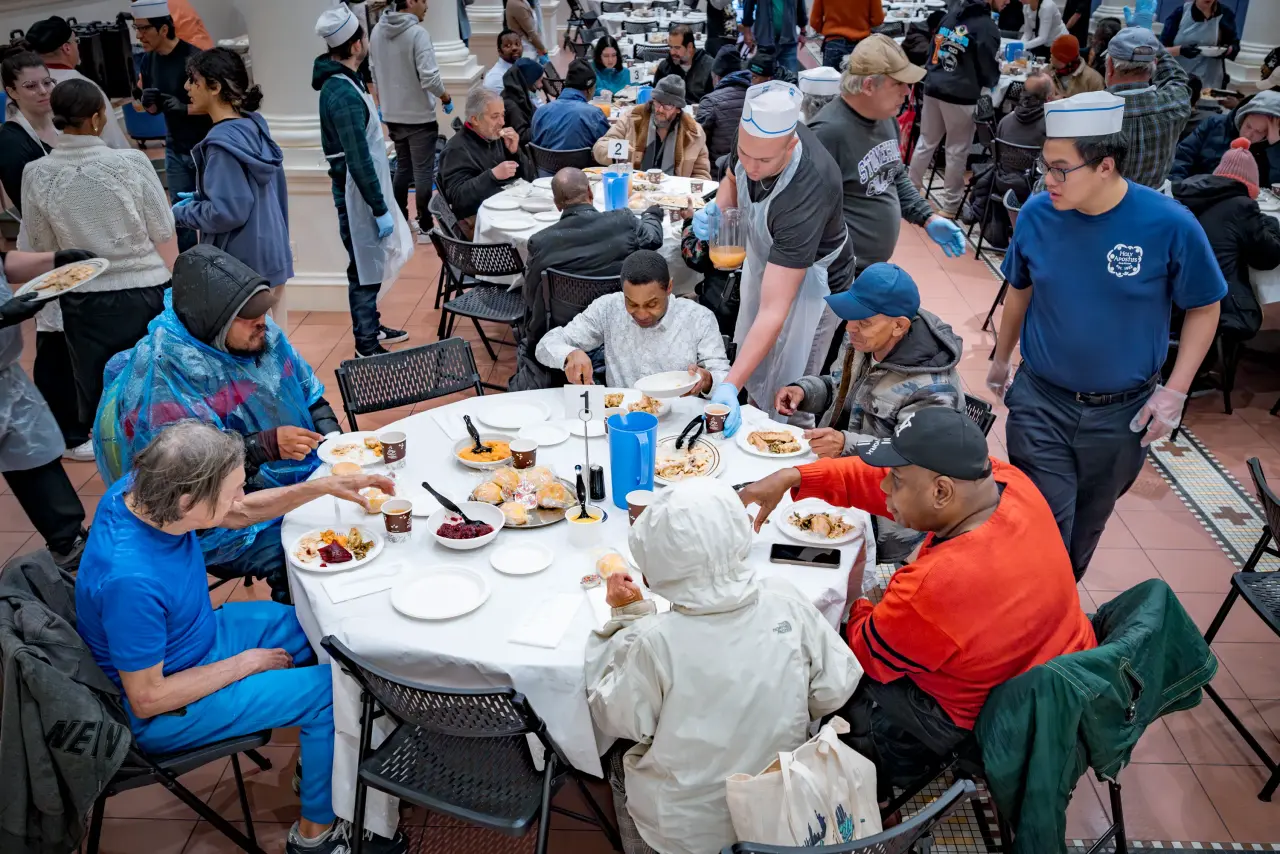
Founded in 1982, Holy Apostles serves around 1,000 free meals each weekday to people experiencing homelessness or financial hardship. It also operates a food pantry that provides groceries and daily essentials to about 1,500 households every month. It is the largest soup kitchen in New York City and the second largest in the United States.
Unlike many soup kitchens that question visitors about their personal situations before handing over a sandwich, Holy Apostles asks nothing. When someone hungry appears, they simply say “Hello” and offer a meal. That philosophy has earned the organization deep public trust-each year, donations, supplies, and volunteer participation continue to grow.
Yet the number of people in need keeps rising. The recent surge in asylum seekers is one factor, but a more universal crisis is New York City’s soaring rent. Even a one-bedroom apartment can cost $2,000 a month or more. Increasingly, not only the homeless but working residents who can’t afford their next meal are lining up outside Holy Apostles.
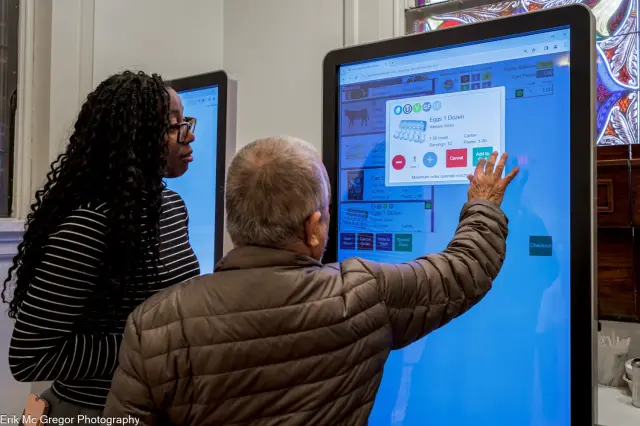
The kitchen sources ingredients through every possible means: donations, direct deliveries from New York State farmers, and local farmers’ markets. The food pantry uses multilingual digital kiosks-in English, Spanish, Chinese, and Russian-where visitors select items on-screen, filling their digital carts with the food and supplies they need. Volunteers pack their chosen items into large Holy Apostles bags, and with a “Thank you,” each person departs the church.
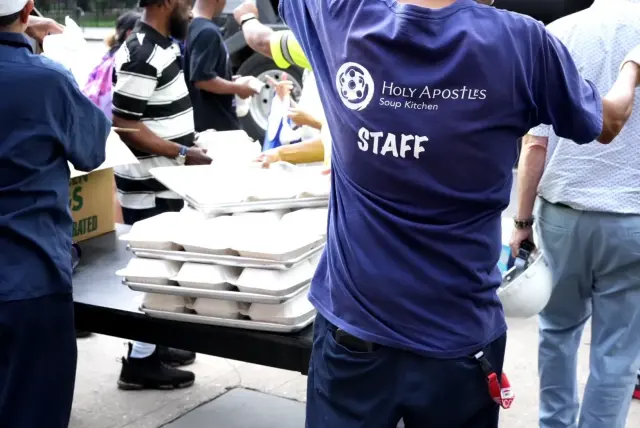
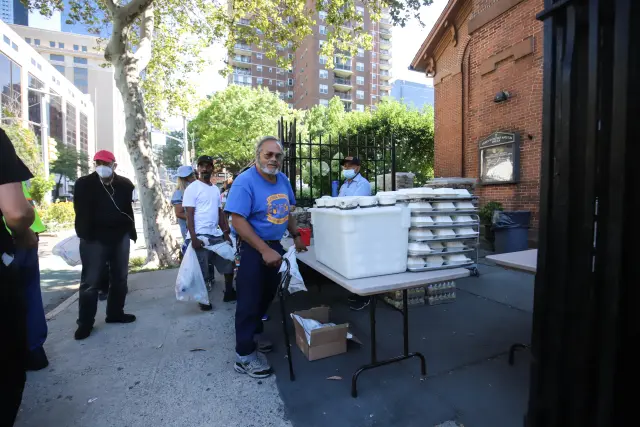
At 10:30 a.m., the meal service begins. About a hundred people are already lined up around the building. Volunteers distribute grab-and-go lunch boxes filled with chicken, mashed potatoes, and mixed vegetables. Some sit down nearby to eat; others disappear silently into the city. Laughter, shouts, and a mix of languages fill the air. “Exciting, isn’t it?” says Michael Ottley with a smile.
INTERVIEW
Michael Ottley [Food Is Home]
——How did you come to work at Holy Apostles?
Michael Before coming here, I worked in New York’s luxury hotels and fine-dining restaurants-so I know the kind of food world your distribution company deals with. I graduated from the Culinary Institute of America in Hyde Park, trained in restaurants, and worked as a chef in several kitchens. Over 30 years passed that way. Then in 2008, just when my career seemed stable, I was laid off. Maybe it was the global recession. Maybe it was my age. I had just bought a house and faced mortgage payments with no income. Out of desperation, I sent my resume everywhere. Holy Apostles was the one that called me for an interview.
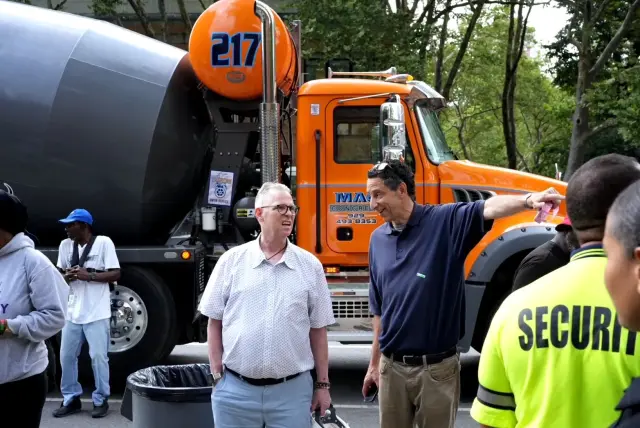
Michael To be honest, I didn’t really know what a soup kitchen was. When I saw the line wrapping around the church, I thought, What on earth is this? The manager told me, “We feed people.” I said, “Well, I know a little about food.” In my previous jobs, I hadn’t only cooked-I often took over struggling restaurants, rebuilt their finances, and prepared them for sale. Running an operation while cooking felt natural to me. The only difference was the clientele.
Reporting Note: Volunteers
Holy Apostles has about 20 volunteers on site at any given time. In fiscal year 2024, 6,689 volunteers contributed a total of 119,435 hours of service. Volunteers are the organization’s lifeblood; without them, it would be impossible to distribute food at this scale.
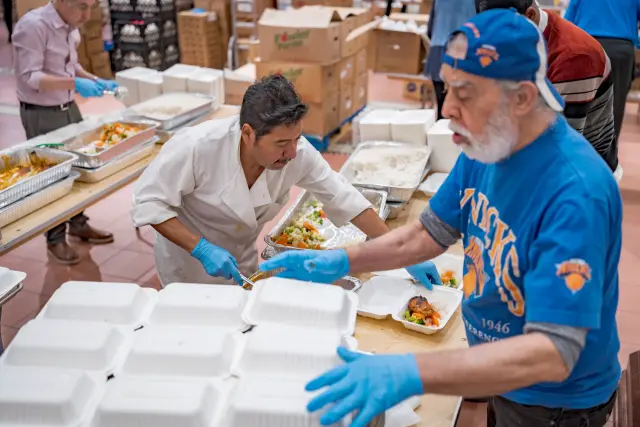
——What was your first impression on the job?
Michael The kitchen team back then used to brag, “Each plate has 2,000 calories-that’s a whole day’s worth of nutrition!” Technically true, but calories alone don’t equal health. The meals were often overcooked pasta or unidentifiable broccoli. My first goal was to provide meals that were fresher and more nutritious for people with dietary challenges-because for many, this might be their only meal of the day. I started building menus that aligned with USDA dietary guidelines. Seventeen years later, that remains my mission: to improve soup kitchen food. And the work still isn’t done.
Reporting Note: Soup Kitchen
On weekdays from 10:30 a.m. to 12:30 p.m., Holy Apostles provides approximately 1,000 take-away meals. For those unable to come to the soup kitchen, it also prepares and distributes about 2,000 sandwiches each week. Last year alone, the organization served 2.3 million meals, reaching a lifetime total of 20 million meals.
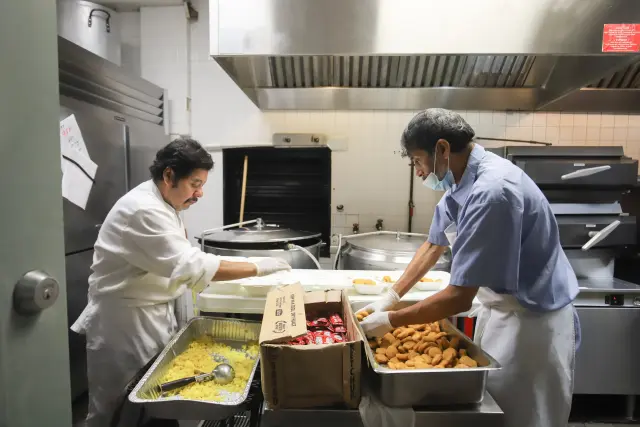
——What changes have you made to the meals since you started?
Michael The Holy Apostles Church has stood here since 1844. It was among the first churches to ordain women and to perform same-sex marriages-a long history of embracing diversity. My first step was to understand who comes here, where they come from, and what they expect from food. Our guests represent countless cultural backgrounds-African American, Hispanic, Russian, Ukrainian, Asian, and many others. Some are vegetarian. So I began designing menus that everyone could eat comfortably, rotating dishes and asking for feedback: what worked, what didn’t. We kept what resonated and replaced what didn’t. It’s a constant cycle of learning.
Reporting Note: Meal Service & Pantry Visitors
People who come for hot meals are primarily those experiencing homelessness or without permanent housing. Those who visit the food pantry are generally people facing economic insecurity. One service Holy Apostles offers is allowing unhoused individuals to use the church’s address as a mailing address. For example, a 70-year-old without housing who receives Social Security benefits may need a physical address to receive mail if they lack a bank account for direct deposit.
——You must sometimes receive unfamiliar donated ingredients.
Michael Yes, sometimes we get foods rarely found in American supermarkets-like Japanese natto. When that happens, I try to introduce it through flavor, showing people what makes it special. Sometimes we receive produce that isn’t in perfect shape. If someone says, “This eggplant has mold-we should toss it,” I’ll say, “No, let’s trim the bad parts and fry it.” We turned it into an eggplant Parmesan once-people loved it. When we got canned salmon, I mixed it with black beans and dill to make salmon cakes-those were a hit too.
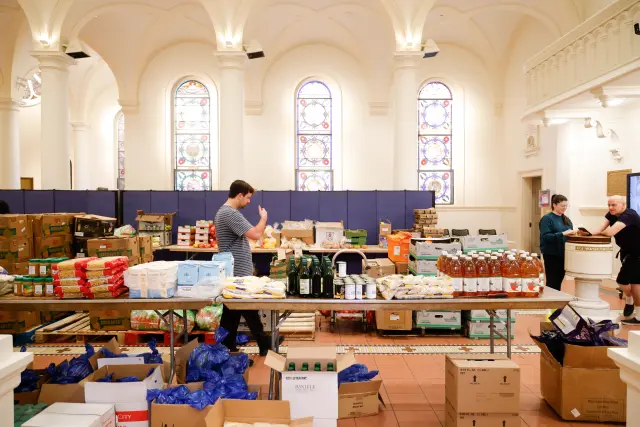
Michael The same applies to the pantry. Eating habits come from culture, so we study what visitors actually eat at home. We analyze daily orders and adjust what we source to minimize waste and better match their needs.
Reporting Note: Food Pantry
Holy Apostles provides approximately 15 days’ worth of food each month to about 1,500 households. Pantry distributions consist of three bags:
1. grains such as beans,
2. protein items like tofu, ground meat, or eggs,
3. fresh vegetables and fruit.
——You seem very aware of the reality behind the phrase “food waste.”
Michael Absolutely. We live next to the problem of food waste every day. I’m always asking: how can we rescue ingredients destined for landfills and turn them into good food for people? We were the first to host a farmers’ market in Chelsea. We also collaborate with NYU, engaging in capstone research projects that deepen our team’s understanding of food sustainability. One fact I discovered really shocked me: if all the world’s food waste were a country, its annual greenhouse gas emissions would rank third-after China and the United States.
Reporting Note: Services Beyond Food
If someone experiencing homelessness is ready to leave street life, Holy Apostles helps connect them to shelters. For medical needs, a van parked in front of the church provides access to care. Clothing is also distributed to prepare for New York’s harsh winters.
Parish Administrator Elizabeth Sterling explains: “Unfortunately, people experiencing homelessness sometimes have their belongings stolen. If someone tells us their coat was stolen, we give them a new one. We also provide hygiene kits with wet wipes, toothbrushes, toothpaste, and mouthwash, as well as shorts, T-shirts, and sweatshirts. These items are donated by the community, but coats are often in short supply in winter, so we purchase good-quality coats online for about $26 each. We also offer computer skills training classes every Monday and Friday to help with employment-but participation is never forced. We respect individual autonomy.”
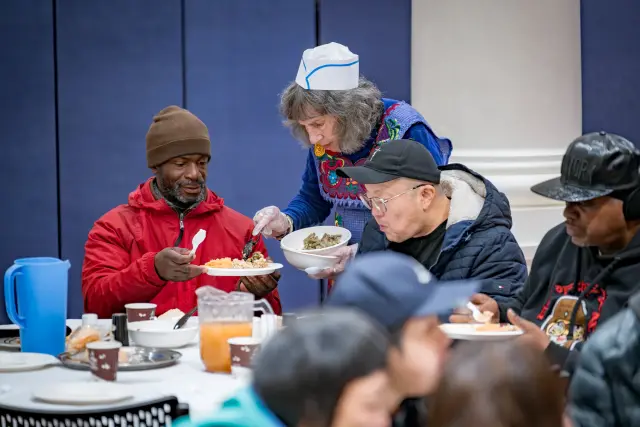
——How do you see your role in New York City?
Michael What we offer here isn’t charity-it’s support. About 80 percent of our visitors are not technically homeless. It’s hard to measure because homelessness is both visible and invisible at the same time, and it’s tied to many issues-first, the cost of living, and then underlying challenges like mental illness and substance dependence. We have to face all of it.
Reporting Note: Donations (Estimated Figures)
In fiscal year 2024, Holy Apostles’ total revenue was $4,793,734. The largest source was individual donations. While there are some government grants, they are not particularly reliable. Donations support everything-from food procurement and staff salaries to electricity, uniforms, and internet costs. Annual operating expenses total approximately $5.2 million, and according to Sterling, continued operation requires even more support.
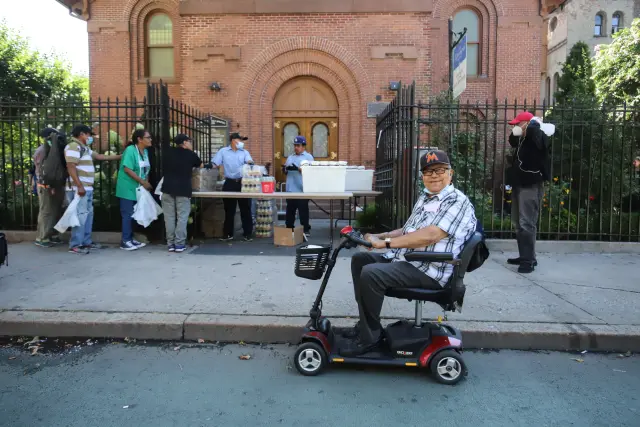
Michael Food is home. In fact, food is the home itself. If you’re hungry, adults can’t sleep and children can’t wake up ready to learn. I honestly believe I’m cooking healthier, better food now than I ever did in fine dining. All of us here work toward the same goal-to make ourselves unnecessary one day.
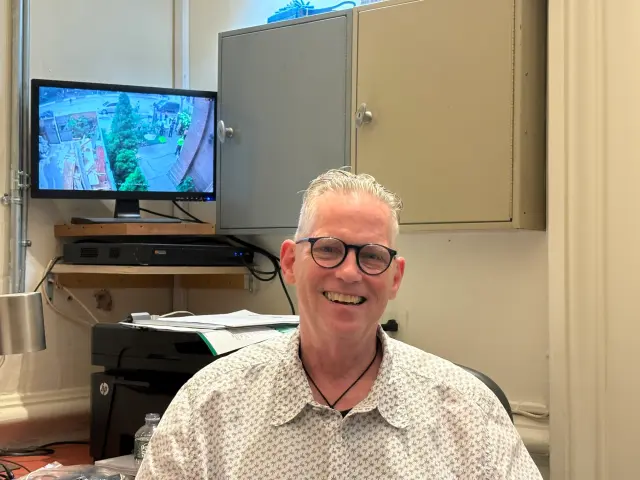
Holy Apostles Soup Kitchen
Location:296 9th Ave, New York, NY 10001
HP:https://holyapostlesnyc.org/soup-kitchen-and-pantry/
Instagram:@holyapostlessoupkitchen
Donation for Holy Apostles Soup Kitchen is here
お問い合わせ
電話でのお問い合わせ
050-1809-5553
営業時間 平日 9:00~17:00