Baekyangsa: Jeong Kwan[The Middle Way of Being]
クリップボードにコピーしました
Article: Takumi Saito
Interpretation: Lee Kyunghwa
Photography: Eisuke Asaoka
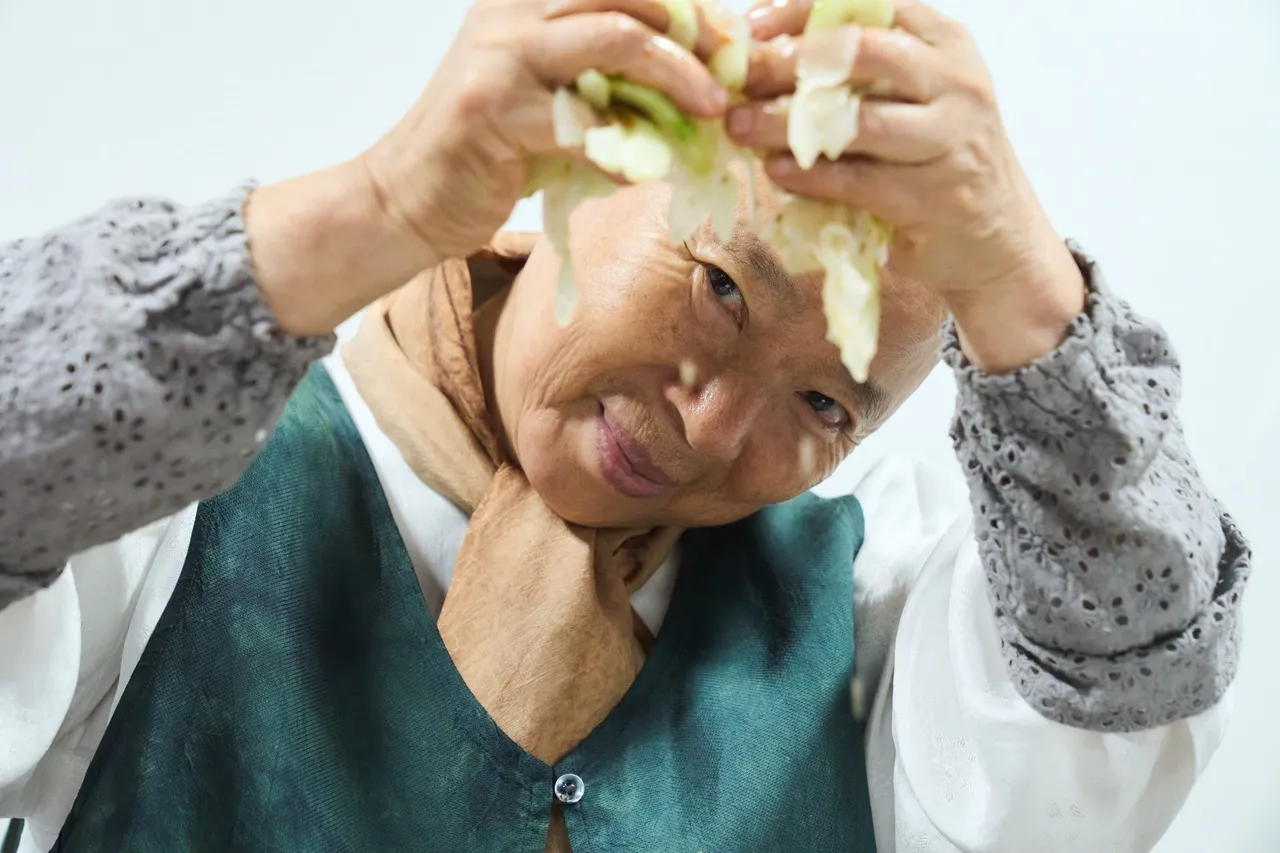
Jangseong-gun, South Jeolla Province, Korea. From Yongsan Station, take the KTX (Korea Train Express) and then a local line, then drive along the edge of a river — and a road appears that winds deep into Baegam Mountain. At its end stands Baekyangsa, an ancient temple founded in the 600s. The lake mirrors the reflection of Ssanggyelou (a traditional pavilion), and the mountainside is blanketed with nutmeg yew trees over five hundred years old. Wrapped in abundant nature through all four seasons, this temple is one of the Five Major Buddhist Monasteries of the Jogye Order of Korean Buddhism, and is known as a place that invites people to reflect deeply on the way they live.
Korea has a tourism program called “Templestay,” which offers visitors the experience of staying overnight at a Buddhist temple. Baekyangsa is one such temple, providing that service for guests. Those who visit spend time quietly facing themselves through meditation, 108 prostrations, bead-making, and temple food.
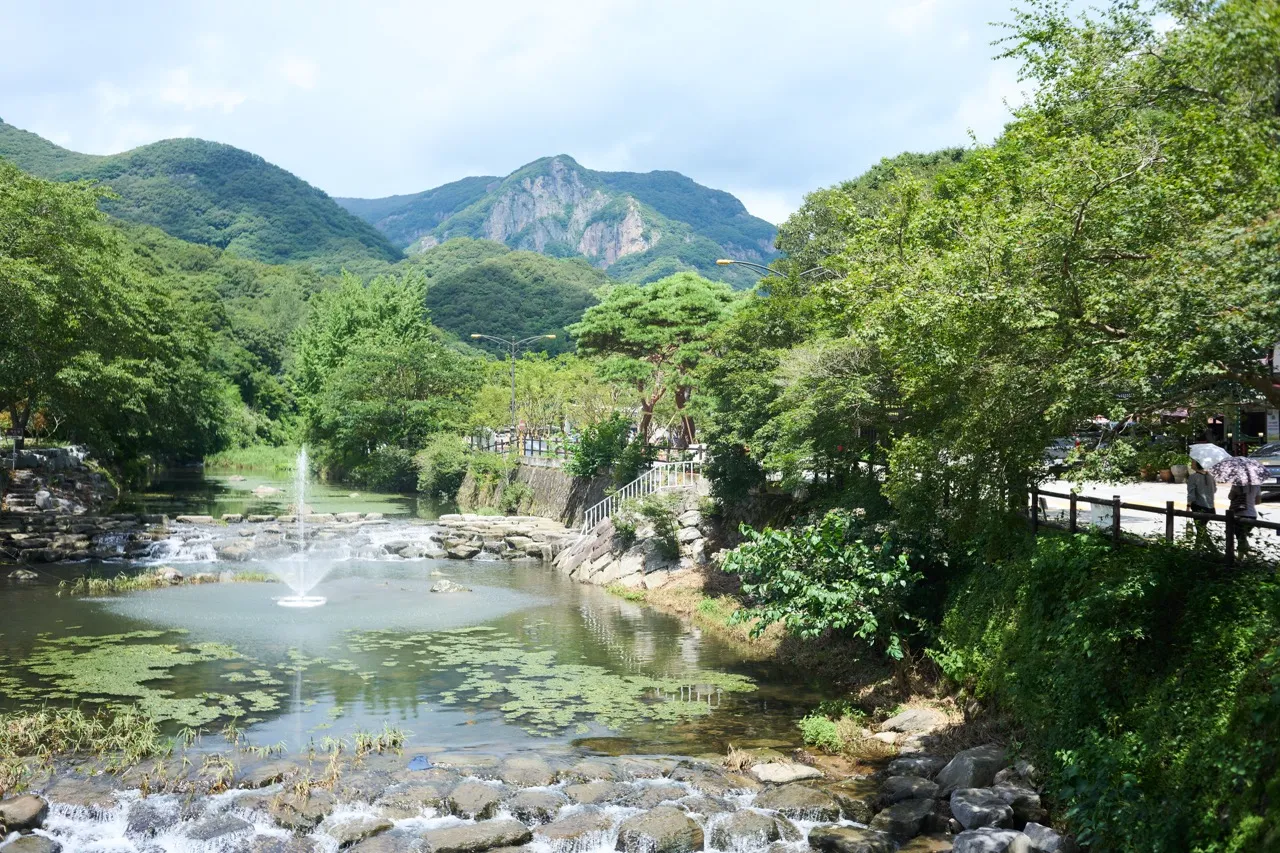
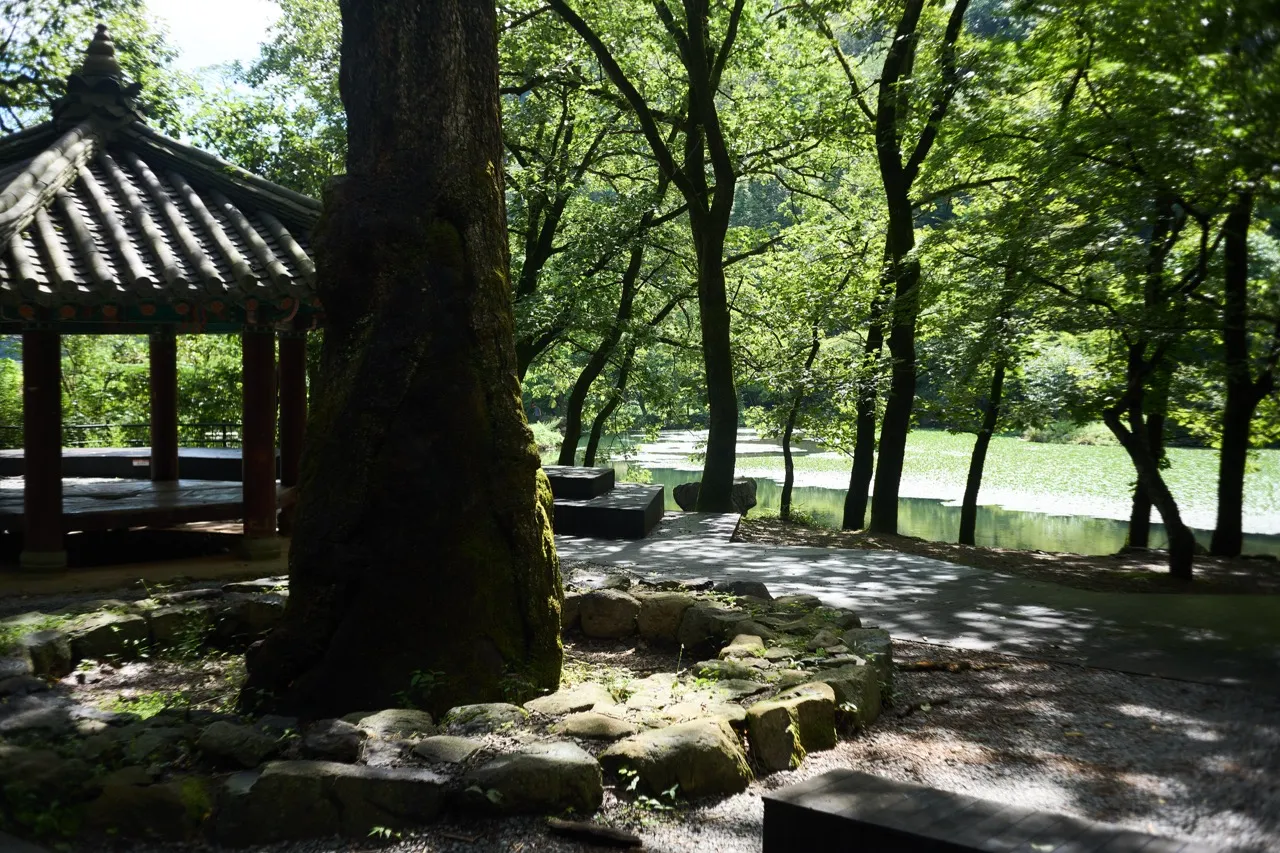
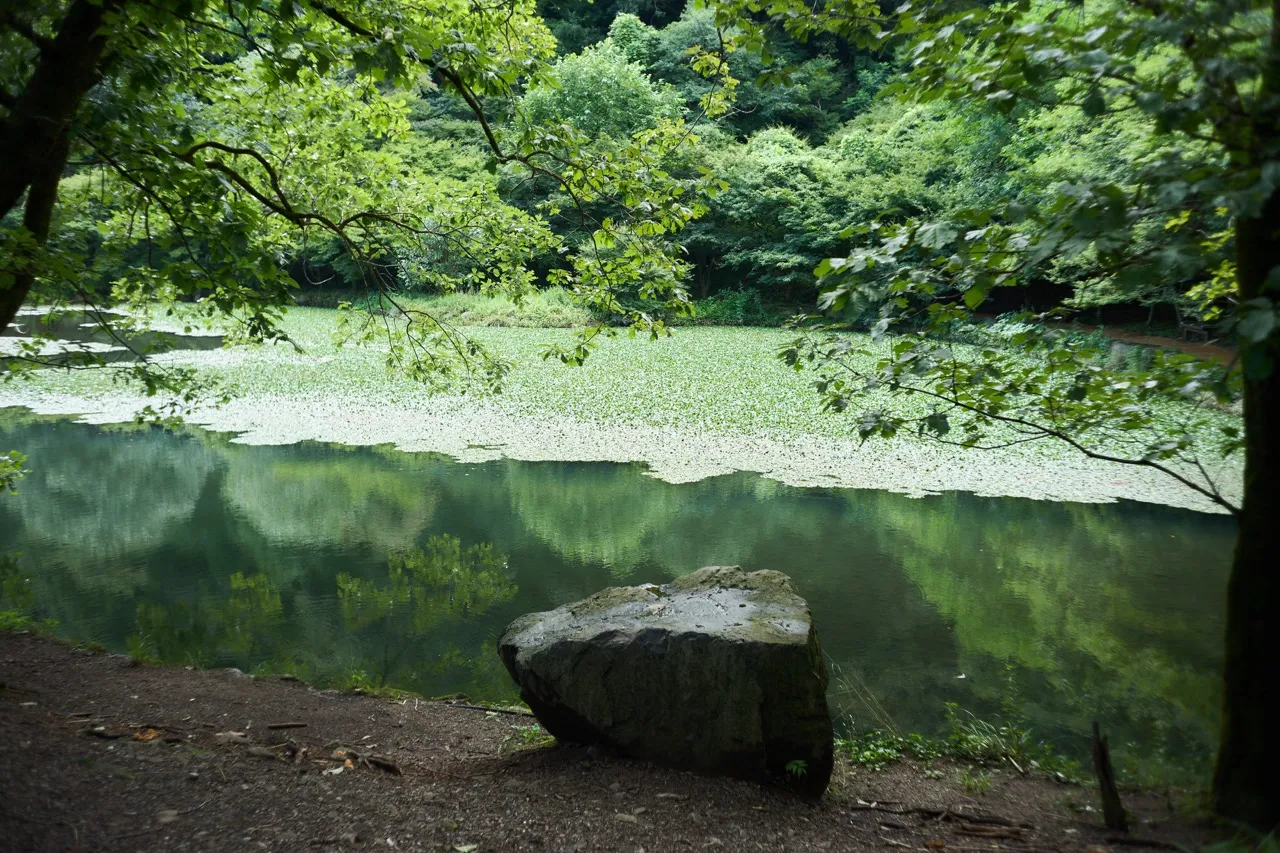
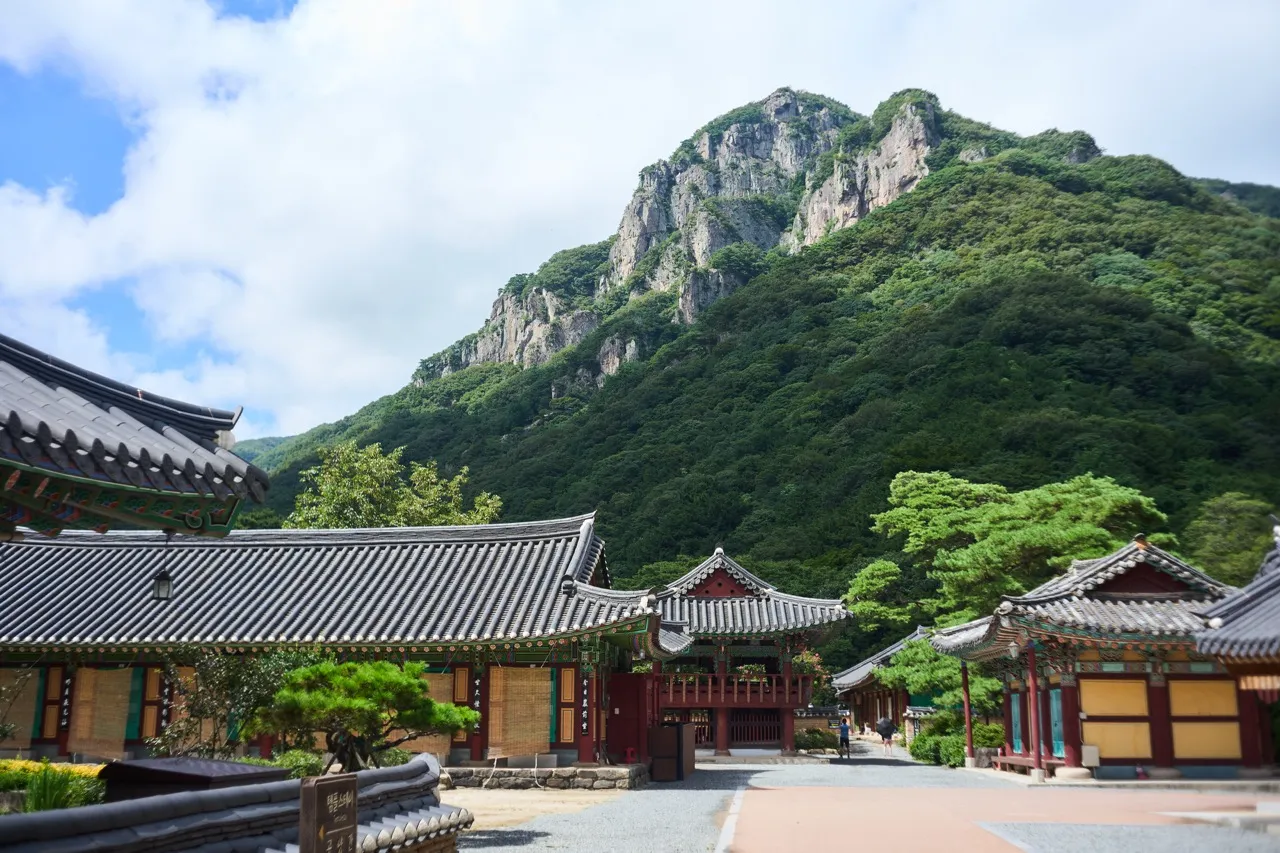
Jeong Kwan’s life unfolds within the mountains and streams. She tends vegetables, prepares temple food, plates it in bowls, and eats slowly and intentionally. At the foot of a small hill near her dwelling was a modest garden — her field. She keeps no fence, accepting that wild boars and insects may take what they will. Rather than forcing plants to grow quickly and large for human convenience, she entrusts everything to nature as it is. She uses no meat or fish, and avoids strongly pungent vegetables. The temple food she creates — from whatever vegetables are in season, combined with homemade doenjang (fermented soybean paste) and ganjang (Korean soy sauce) — cannot be fully captured by words like “healthy eating” or “vegan.” Rooted in the concept of the five skandhas (form, sensation, perception, mental formations, and consciousness), it is necessary to think of food as a unified whole encompassing body, mind, and the external world.
Wishing to learn her food philosophy firsthand, I asked to be shown her garden. But the response that came back from her disciple, Kaema, was unexpected.
“Nothing is growing there at the moment. It’s overgrown with weeds.”
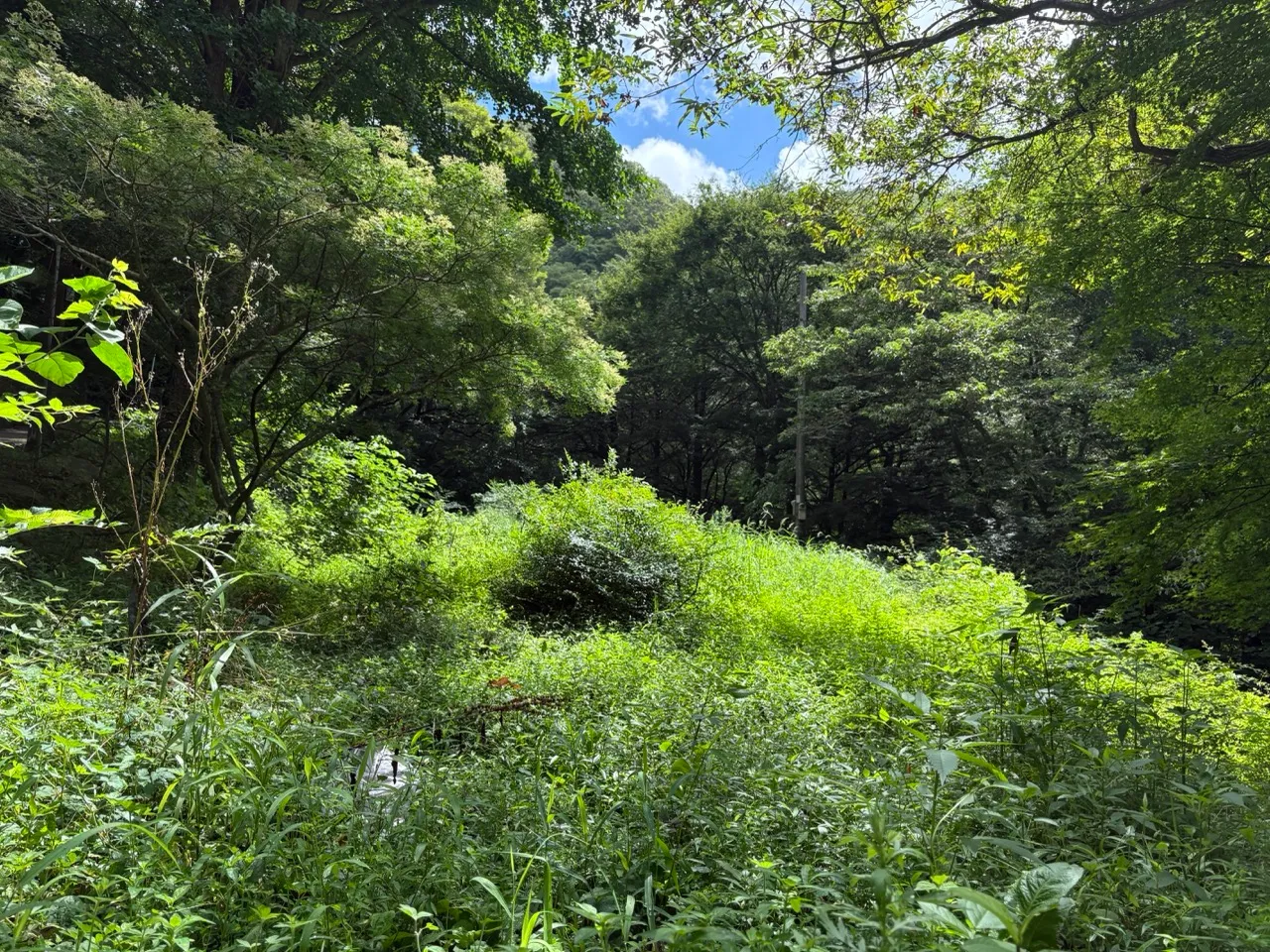
Jeong Kwan entered monastic life at seventeen, following the death of her mother. It was a loss — and perhaps also a chance at rebirth. She arrived alone at Baekyangsa, with nothing and without telling anyone. As the years passed, world-renowned chefs such as René Redzepi of Noma began making pilgrimages to Baekyangsa, drawn by her temple food and its philosophy. She appeared on Netflix’s Chef’s Table, and in 2022 received the Icon Award at Asia’s 50 Best Restaurants. Since then, Jeong Kwan has traveled the world at the invitation of institutions and events, sharing her food philosophy. Her Instagram documents this journey. Yet even as global attention gathers around her, the garden goes untended. The contrast felt symbolic. Kaema’s message added: “The nun is preparing for spring.” Learning that the garden, too, is in the midst of renewal, I found myself seeing it as a mirror of the nun’s own spirit. The interview took place on August 15, 2025. In the night, with the sound of a stream and the song of crickets intertwined, the nun smiled and began to speak.
INTERVIEW
Jeong Kwan [The Middle Way of Being]
——First of all, I’d like to ask what you are thinking when you cook. What is happening inside you?
Jeong Kwan When I cook, I pour the universe into each and every ingredient I use. Where was this ingredient born, and in what kind of environment did it grow? How was it chosen, transported, and brought here to this moment? Is it something eaten in spring, or in summer? I weave together all the information that an ingredient holds, build a universe from it, and place that entire whole into one dish. In doing so, the ingredient and I become one. If the ingredient is a leaf, I become the leaf, and the leaf becomes me. At the most fundamental level, the universe and we are already connected. What calls that connection to mind — that is what an ingredient is, and that is what the act of cooking means.
Temple Food Demonstration: “Perilla Leaf Namul”
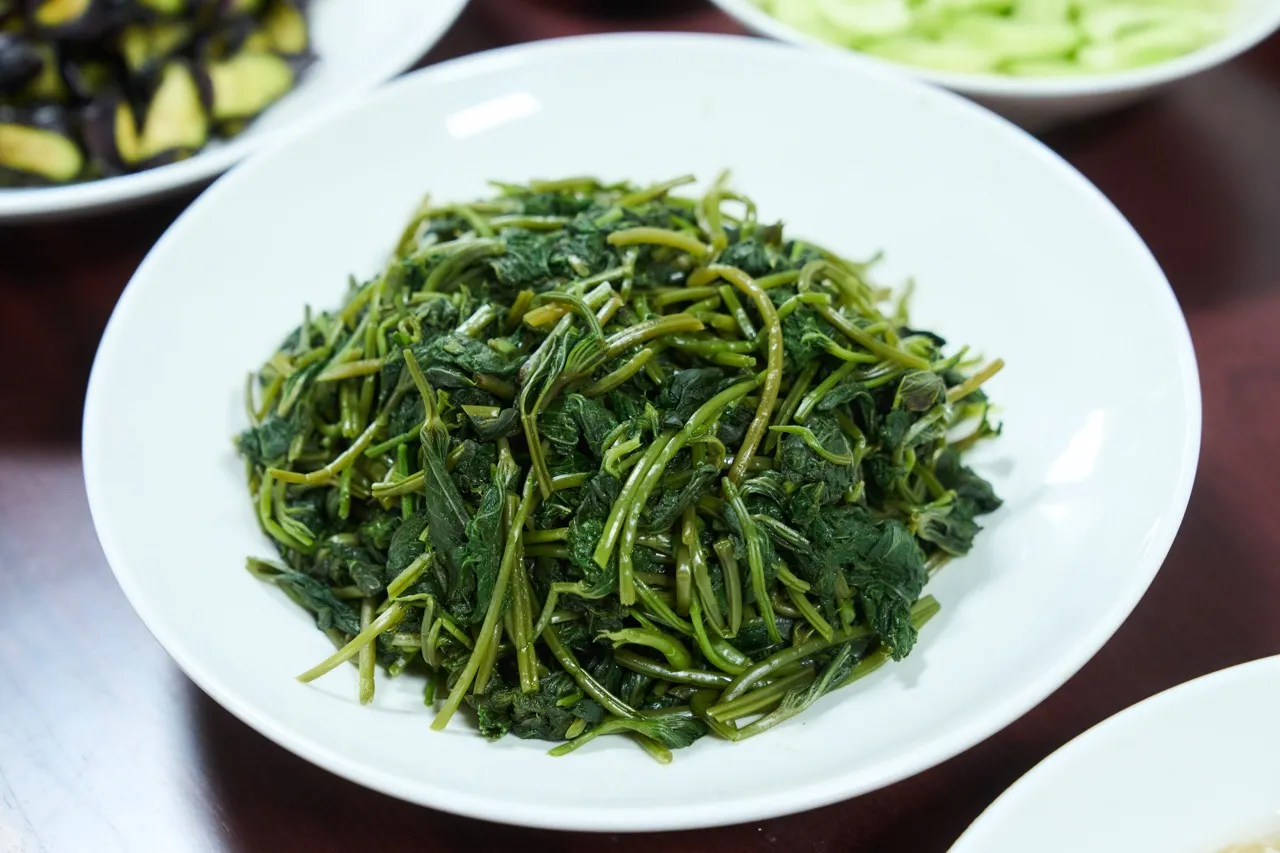
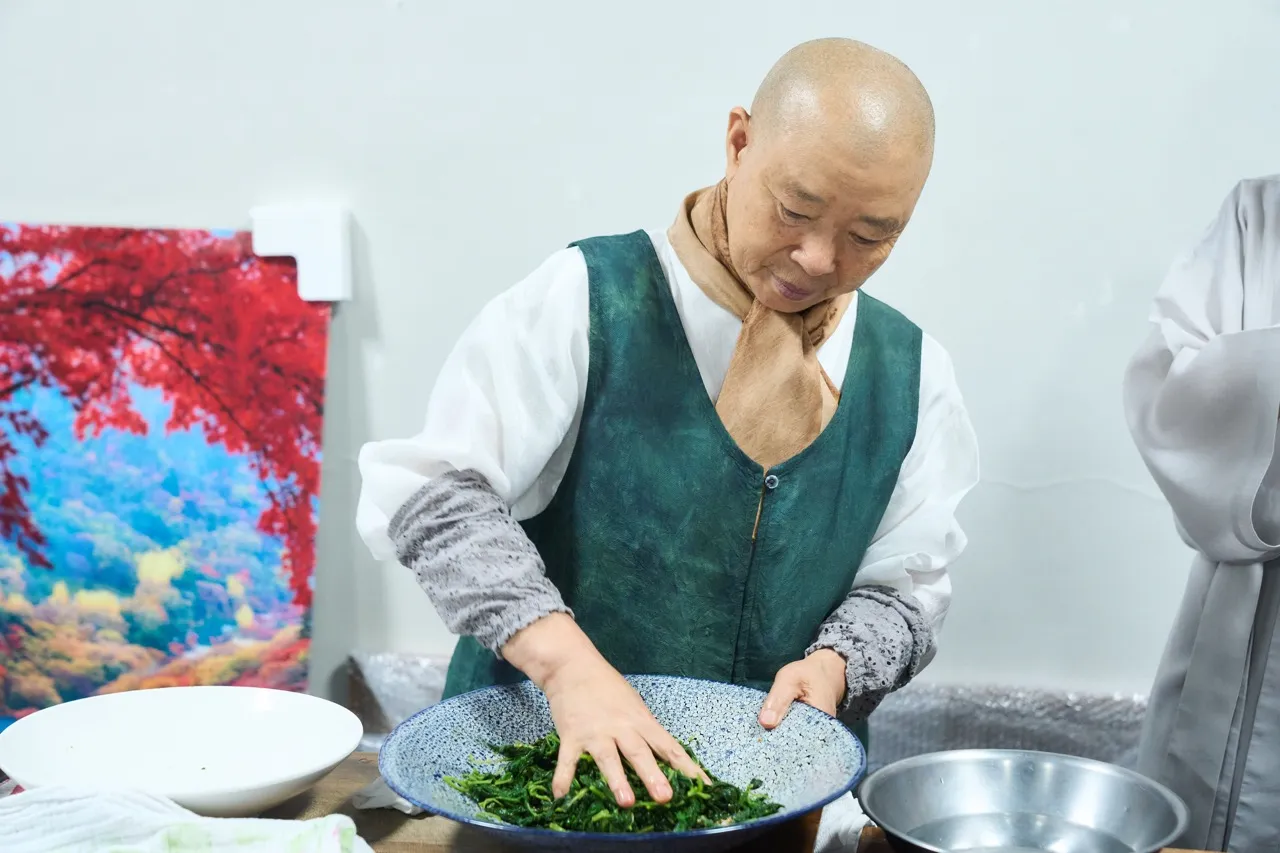
These are the tips of perilla shoots — the young leaves. Because perilla will not flower if its leaves become too dense, it is important to remove the lower leaves first in order to leave many seeds. Perilla is remarkable: the leaves can of course be eaten, and the seeds can be made into powder or pressed into oil as well. We blanch the leaves, add a little sea salt and ganjang, and it is important to mix these with bare hands. The hands hold not only the energy of the present moment, but all of the energy of every version of myself that has led up to this day. So that this may be transmitted to those who eat, I mix with bare hands.
——Your field has no fence. It is open to wild boars and insects — truly a natural state. And yet I’ve heard you haven’t been able to use it much recently. Can you tell me about your approach to farming?
Jeong Kwan When I sowed seeds of heirloom varieties, the number of plants multiplied within the natural environment, and wild animals such as deer began to increase in turn. This mountain is a rocky mountain, so food sources are not especially abundant here. When I sow seeds to grow crops, animals come specifically to feed on them. Because of this, I find myself in a situation where I need to rethink the soil itself, till the land anew, and reconsider both which seeds to choose and how to grow them — focusing on crops that animals tend not to eat, things closer to wild mountain greens that grow naturally.
——So you are looking to change your farming methods?
Jeong Kwan Yes. I plan to restore the field this autumn and grow things we can eat next spring. During winter, temperatures in this area drop to minus ten degrees Celsius, and snow piles up to knee height, making it very difficult to grow crops. But the crops that survive such conditions tend to be ones that animals don’t particularly eat. Part of why I tend the field is to be able to harvest the ingredients I need for cooking at a moment’s notice.
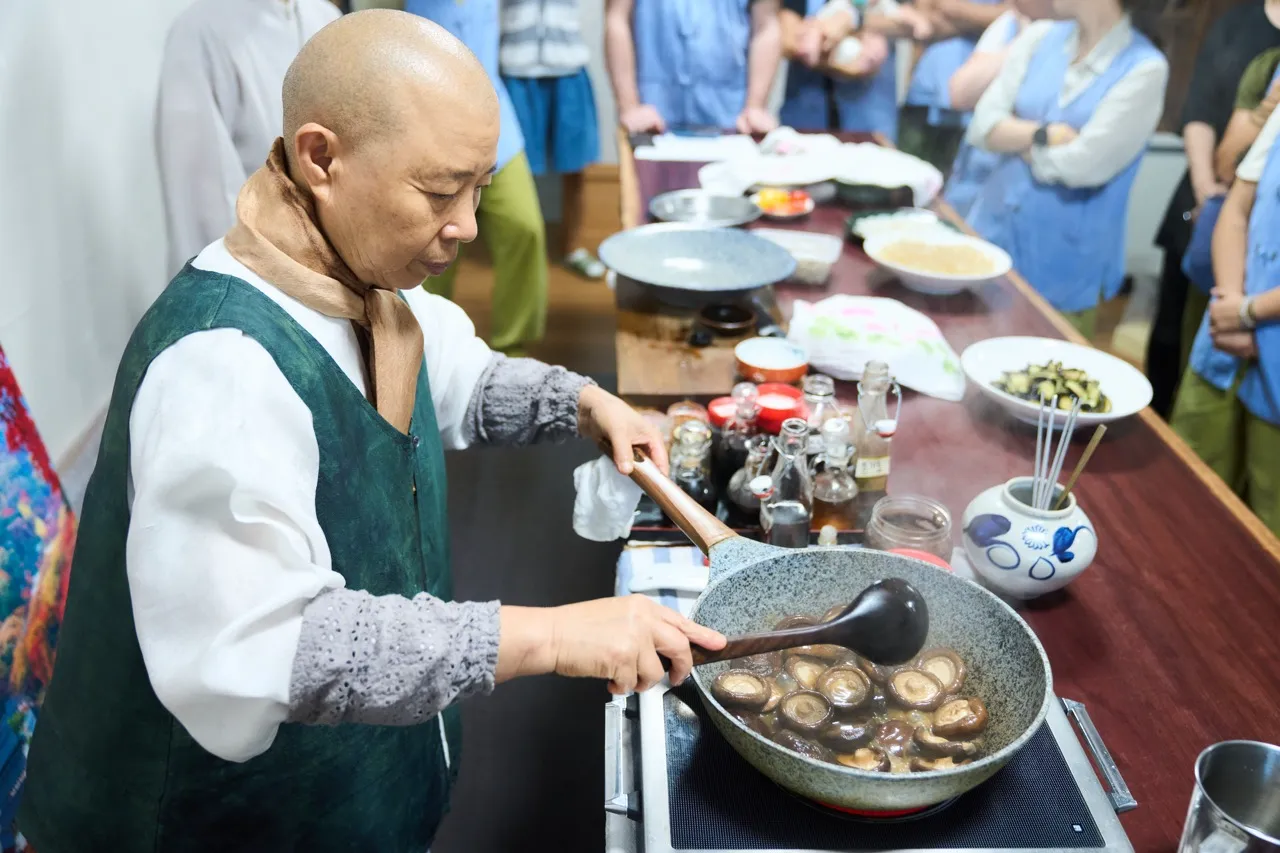
This place is deep in the mountains, with a valley running right alongside it — a corridor that wild animals use to reach the water. This field sits along that path to the water source, so animals stop here on their way back and forth to eat. Sharing what grows here with them is, in itself, fine by me. The problem is that they eat everything at the seedling stage, before anything has had a chance to grow. If things were a little more advanced, we could reach a good understanding — you eat some, I eat some — but they consume all the new shoots before we ever get there. And so I’ve had to let the field rest while switching to different seeds. For now, I have left things as they were since spring, and I am observing which plants that have grown on their own are ones the animals will not eat. They tend to be things with a strong fragrance, a tougher texture, and a slight hint of toxicity. Like shiso, for instance — as it is known in Japan. What naturally survives in the end is what we eat.
Temple Food Demonstration: “Braised Dried Shiitake in Ganjang”
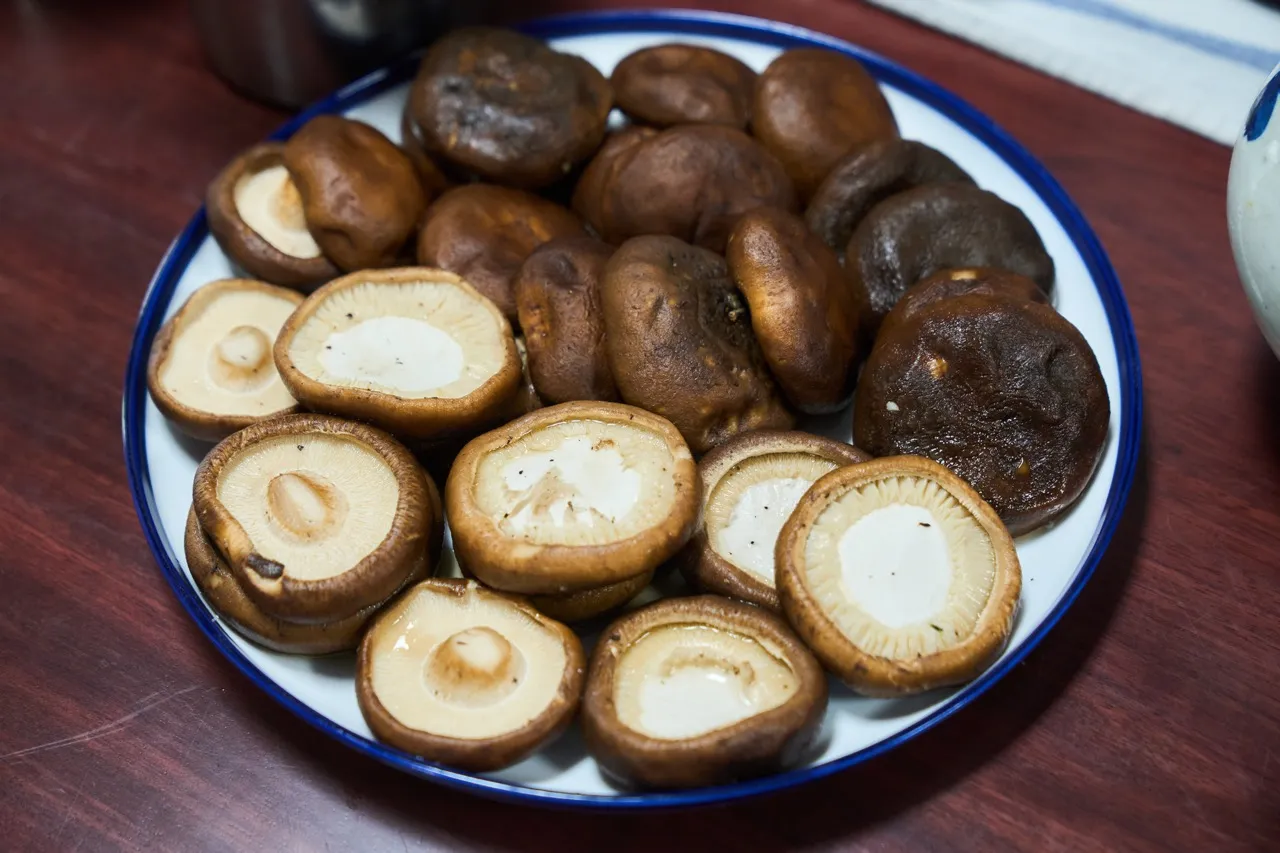
Let me show you the braised dried shiitake in ganjang — the signature dish featured on Chef’s Table. It takes approximately five years for a shiitake mushroom to reach this size. Those with thick flesh must never be cooked quickly. The thicker it is, the longer it has taken to grow, and so to draw out its energy fully, we add enough water to submerge it. Then we add ganjang that has been aged for eight years, along with perilla oil. We braise slowly, so that the saltiness of the ganjang and the fragrance of the perilla oil penetrate all the way through to the inside of the thick flesh.
——Is farming and cooking also part of your spiritual practice as a nun?
Jeong Kwan To tend one’s own field is to allow the energy rising from within oneself to take root in nature and set it in motion. When that energy concentrates into a single point and reaches a state of ignition, concentration becomes unceasing. When you till the earth, cook, and speak with others with that spirit in your heart, your energy is further refined, and you come to be in communion with all things. People, animals, plants, and beyond that, every unseen existence — all of these are the objects of my practice.
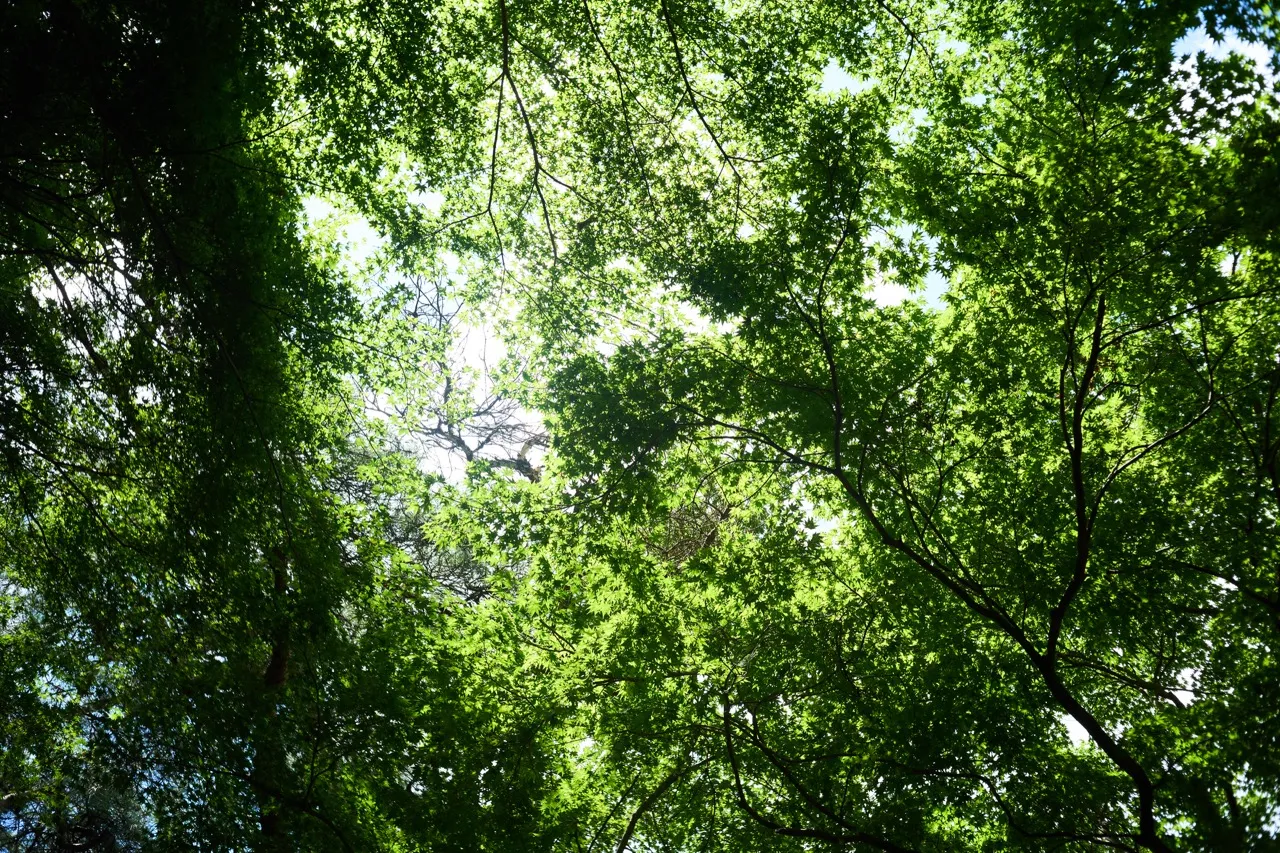
The nature of this mountain may appear to a first-time visitor as mere scenery. But the way the trees and grasses change their appearance day by day, the fact that tiny living creatures dwell upon those leaves — I have already seen all of this thousands of times with both my eyes and the eye of my heart. Even in a scene glimpsed in passing, I am able to feel “life.” When I myself can feel it, I can pass it on to others. Farming is also practice; turning the vegetables grown with that spirit into food and passing it along is also practice. There is not a single thing that is not practice. Every action is practice.
Temple Food Demonstration: “Sweet Potato Leaf Namul”
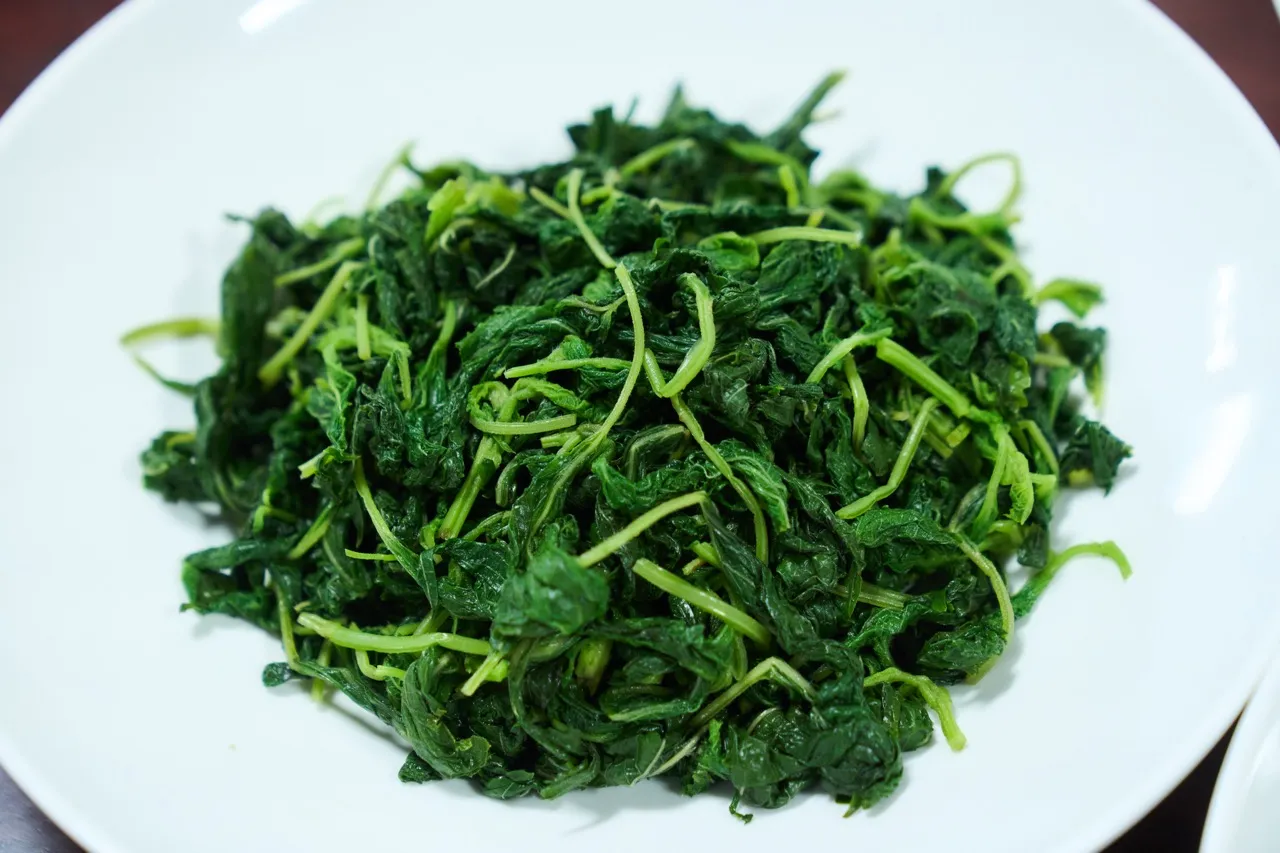
These are sweet potato leaves. The sweet potatoes planted in spring are growing vigorously right now, but if left on their own, the leaves grow so densely that the potatoes themselves won’t enlarge. To allow them to grow large, we remove the stems and leaves partway through. We dress these with eight-year-aged doenjang. The three essential seasonings in Korean cooking are ganjang, doenjang, and gochujang (chili paste). Gochujang darkens and deteriorates the longer it sits, so it is best used within one to three years. Gochujang is not a condiment — it is a “food.” We do not add sesame oil to doenjang, because the intensity of sesame oil kills the fermentation in the doenjang. To add sweetness, we stir in a syrup made from bokbunja (wild raspberry) aged for seven years, and a ginger syrup fermented for three years. This is actually a combination I am trying for the first time. I don’t know yet what flavor it will be. Let’s experiment together.
The Middle Way of Being
——I feel that being here during this time of Liberation Day and being able to put this question to you is itself a very precious experience. It may be a somewhat unexpected question, but do you believe that eating temple food can contribute to world peace?
Jeong Kwan Every thought and ideology carries its own particular worldview. Just as people’s ways of thinking and values differ with the changing of times, the form that politics and religion take differs from one country to the next. When people try to force their views through, desire and attachment arise and bring about conflict. Yet all of this emerges from conditions and relationships that exist on the outside.
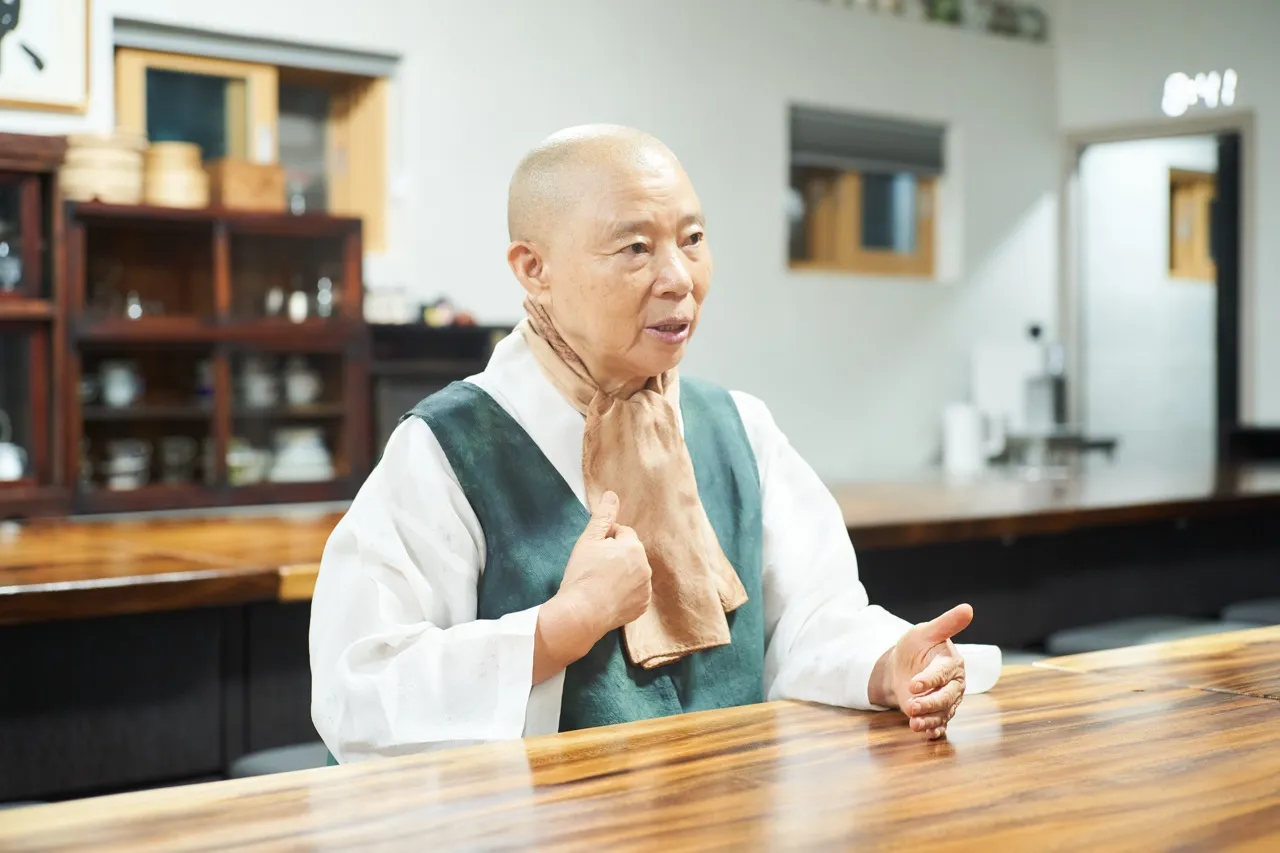
In the phenomenal world — the world of appearances — our minds and the external world may seem unrelated. Yet at the same time, we are beings who breathe together, learn together, and live together within the shared frame of this one earth. To go on living, regardless of the circumstances one finds oneself in, a person must eat. There is no stopping it. Eating is something that transcends ideology and values. In the time of eating, there is no conflict, no social or political tension, and that state is quiet and full of happiness. And so I believe that through food, at least at the level of the heart, peace can be created.
——In other words, connecting with people through the spirit of food is what matters?
Jeong Kwan Yes. Through eating, the heart is filled and hunger is eased. Through food we can talk about its flavor and aroma — that is to say, we can communicate. It is not necessary to always be with others. Even alone, if you can face the single bowl before you with a pure heart, you will be able to find peace within that time.
——In a broader sense, what does food mean to you?
Jeong Kwan It is, precisely, my very “life.” Food is like a companion to me — something I cannot be without. But there must be neither too little nor too much; either becomes suffering. That is why the “middle way” matters. To remain in a mind that does not lean to one side. To keep a gentle heart. When I am with food, I feel at peace.
Now, please take only what you can eat. You must not leave anything behind. Where does this food come from? My virtue is not sufficient to receive it. I lay aside all desire within the mind, and receive this as medicine to sustain the body. I offer this meal in the seeking of enlightenment. Maha Prajna Paramita.
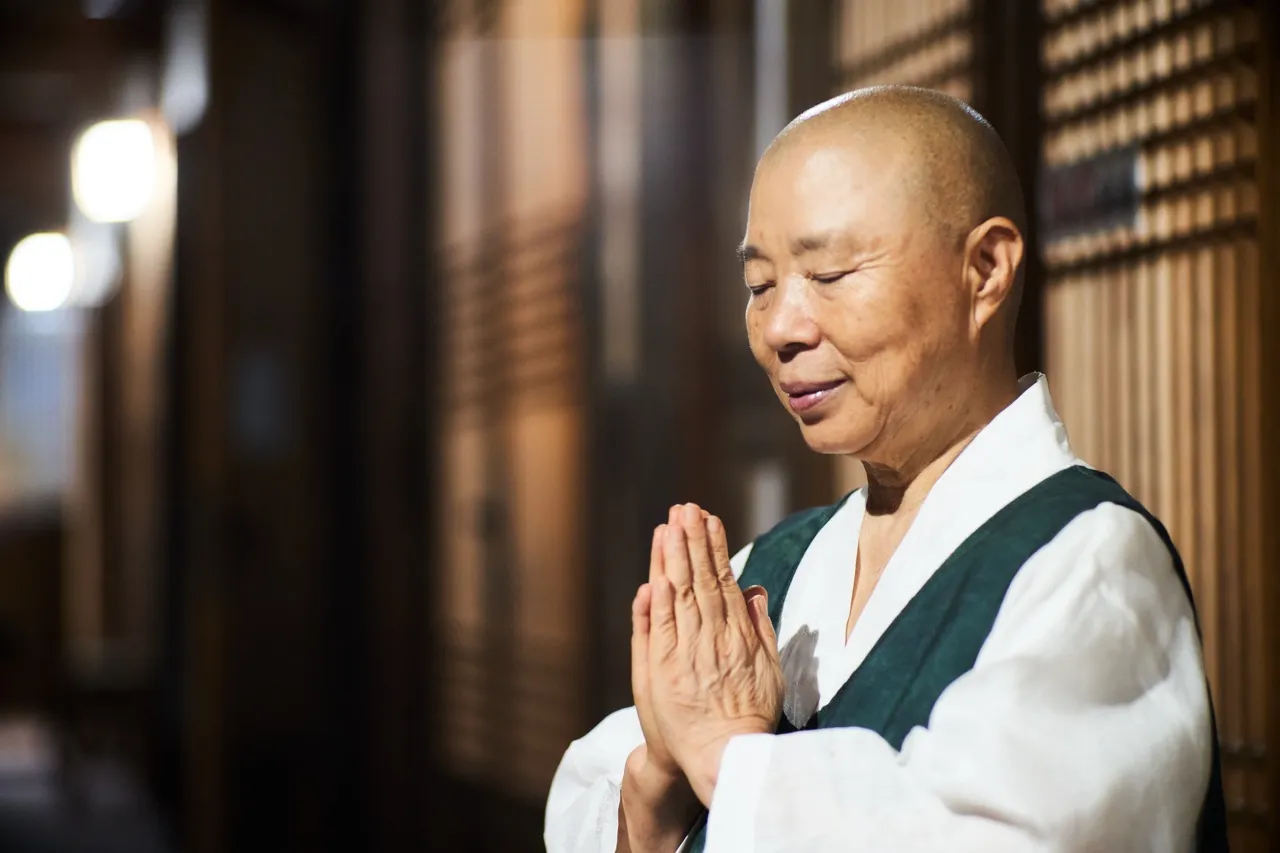
Baekyangsa
Address: Jangseong-gun Jeollanam-do Bukha-myeon Baekyang-ro 1239
Jeong Kwan Instagram: @jeongkwansnim
Temple Stay Reservation is here: https://templestay.com/en/...